





LPDDR6 is designed for the next generation of on-device artificial intelligence, and a Chinese memory maker says it has become the first to reach mass production.
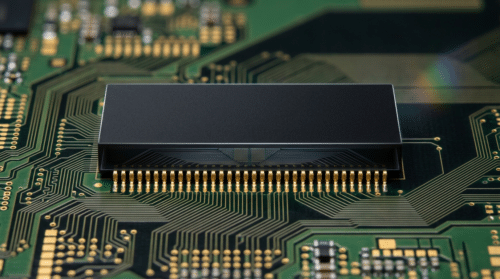
LPDDR6 is a term readers have increasingly encountered in phone launch coverage without much explanation of what it actually means. ChangXin Memory Technologies (CXMT), China’s largest dynamic random access memory (DRAM) maker, has announced that it has begun mass production of LPDDR6 and will supply the chips for Xiaomi’s upcoming 18 Fold smartphone. The partnership provides an early indication that the new memory generation is moving from specification to commercial devices.
LPDDR stands for low-power double data rate memory. It is a type of DRAM used alongside processors in smartphones, tablets and thin laptops. JEDEC published the LPDDR6 standard as JESD209-6 on July 9, 2025. The architecture changes more than just the speed: LPDDR5 uses a 32-bit interface per die, while LPDDR6 uses a 24-bit interface divided into two sub-channels with 12 data lines each and four command and address signals per sub-channel. The narrower channel structure allows more memory operations to remain active simultaneously, while supporting flexible burst lengths of 32 bytes and 64 bytes.
LPDDR6 also adds reliability and protection features previously associated more closely with higher-end memory systems. These include on-die error correction code (ECC), per row activation counting to help protect against row-hammer-style disturbances, programmable link protection, command and address parity, error scrubbing and memory built-in self-test.
The traditional way to increase memory speed was to raise the clock frequency, but higher speeds increase power consumption and make signal integrity more difficult to maintain. LPDDR6 instead changes the signalling method. The new standard supports PAM3, or three-level pulse amplitude modulation, which uses three signal levels to transfer more information over the same connection than conventional binary signalling.

Power efficiency is the other major focus. LPDDR6 introduces dual VDD2 supplies and dynamic voltage and frequency scaling for lower-power operation, reducing the VDD2 supply voltage when the memory runs at lower speeds. Partial and active refresh mechanisms also reduce the energy used to maintain stored data.
JEDEC’s published LPDDR6 standard defines data rates ranging from 10.667 GT/s to 14.4 GT/s. The separately reported 43.2 GT/s figure associated with CXMT should not be treated as an equivalent per-pin LPDDR6 data rate because its measurement basis is not clearly established.
The first LPDDR6 parts are expected to appear in Xiaomi’s upcoming 18 Fold smartphone. Beyond phones, LPDDR6 is aimed at on-device artificial intelligence and automotive systems, where memory bandwidth can become a major constraint on how quickly large AI models and other data-intensive workloads can run locally.
This is the commercially significant part. Until now, the high-end mobile DRAM market has been dominated by three major suppliers. A fourth supplier reaching LPDDR6 production at the beginning of a new memory generation could strengthen competition and give handset makers another potential source of leading-edge mobile memory. The development also comes during a period of tight memory supply that has contributed to rising component costs and higher smartphone prices in some markets.
The next developments to watch are independent confirmation of CXMT’s LPDDR6 memory in commercially shipping handsets and the production timelines of other major memory manufacturers. Export controls could also affect CXMT’s ability to expand production capacity, making manufacturing scale an important factor in determining whether the arrival of another supplier can materially increase supply and ease memory prices.
India is where rising memory prices can be felt particularly quickly. In the April–June quarter of 2026, smartphone shipments in India reportedly fell 10 per cent year on year as rising device prices weakened demand. Memory costs have also increased their share of the bill of materials in lower-priced smartphones, making a market concentrated around affordable devices especially sensitive to increases in DRAM and storage prices.
A credible fourth LPDDR supplier could therefore matter significantly to Indian handset buyers by increasing the number of potential sources for advanced mobile memory. India does not currently fabricate DRAM wafers domestically. Micron’s Sanand facility is an assembly, testing, marking and packaging facility rather than a DRAM fabrication plant, although it has begun commercial production of semiconductor memory products. LPDDR6 is likely to remain a premium-device technology initially and move into lower-priced phones only as compatible chipsets and memory devices reach broader adoption.
For more information, click here.

