Polymer developed by KIST enables high-performance data storage and complete biodegradation in water—paving the way for eco-friendly and implantable electronics.
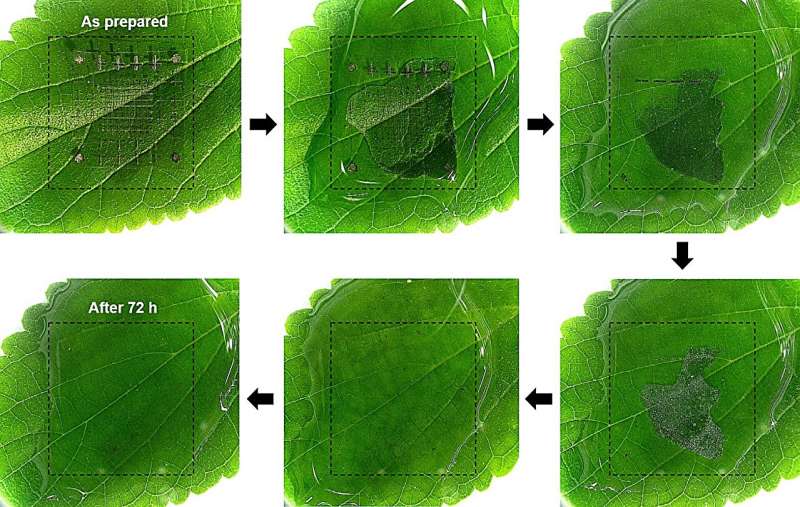
The Korea Institute of Science and Technology (KIST) has unveiled a major breakthrough in eco-conscious electronics. A joint research team led by Dr. Sangho Cho (Center for Extreme Materials Research) and Dr. Yongho Joo (Center for Functional Composite Materials Research) has developed a polymer-based memory device that offers robust data storage and full biodegradability in water—addressing a major source of electronic waste from disposable and implantable devices.
As the proliferation of wearable and implantable electronics grows—from fitness trackers and smart patches to ingestible or skin-mounted sensors—so does the environmental challenge of disposing of them. Most end up as e-waste. The new material developed by KIST not only stores data reliably but also disintegrates completely in water within three days, without leaving any harmful residue.
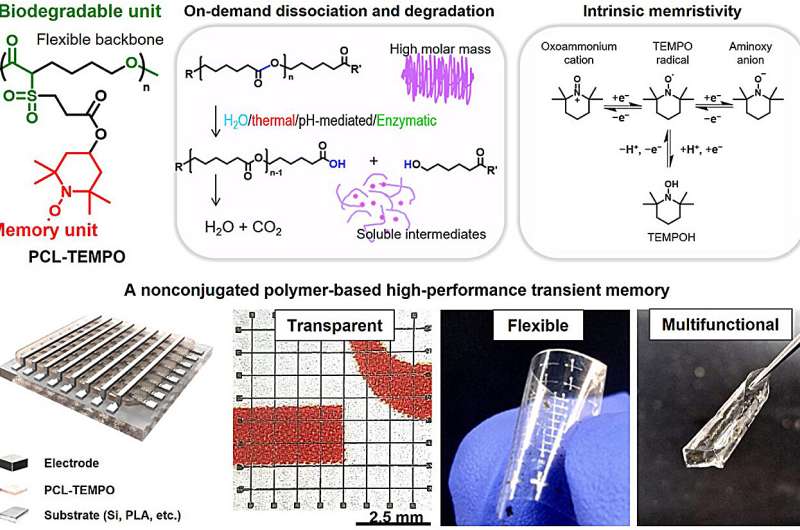
The research describes a novel molecular design using a compound called PCL-TEMPO. By combining polycaprolactone (PCL), a biodegradable polymer, with TEMPO, a functional organic molecule for data storage, the team created a material that balances durability and environmental friendliness in a single system.
The memory device built using this material performed impressively, maintaining ON/OFF signal clarity over one million cycles and retaining stored data beyond 10,000 seconds. It also showed no deterioration after over 250 write-erase cycles and remained fully functional after 3,000 mechanical bends.
Importantly, the degradation process can be precisely controlled by modifying the protective layer’s thickness and composition, making the material safe for human implantation and ideal for time-limited electronic applications.
Beyond medical implants, potential use cases include disposable health monitors, eco-friendly data storage, and single-use military electronics. Its self-dissolving nature could eliminate the need for secondary surgery to remove implants, reducing healthcare costs and patient discomfort.
“This is the first time high-performance data storage has been integrated into a self-destructing organic memory device,” said Dr. Cho. Future enhancements may include self-healing and light-responsive capabilities to create intelligent, transient bioelectronics.