




Hydrogen cooking stove turns water into clean fuel, enabling long cooking hours with minimal power and zero emissions.
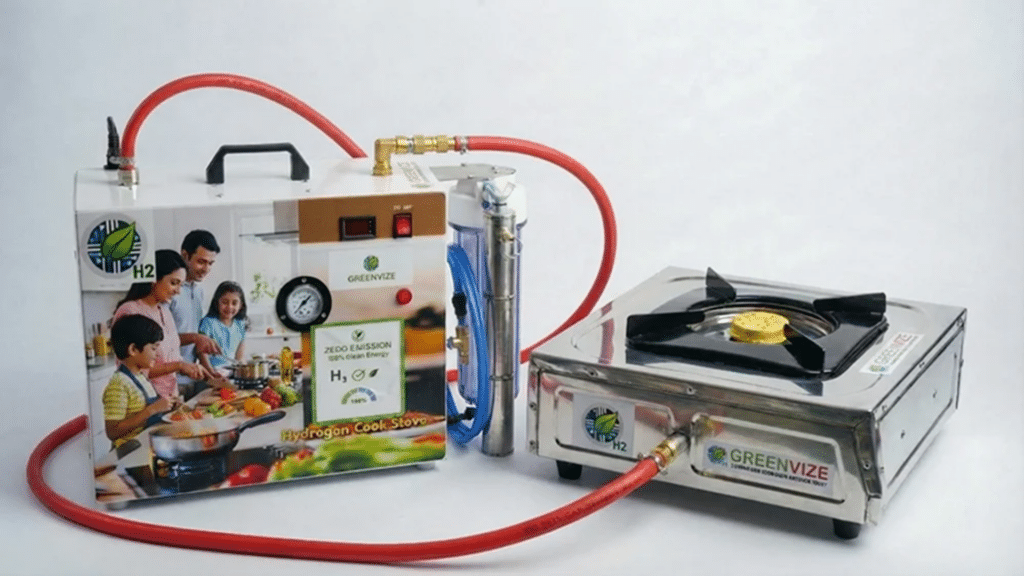
A new hydrogen cooking stove is redefining how fuel can be generated and used in everyday kitchens. Developed by Indian clean-tech startup GreenVize, the system converts water into hydrogen fuel in real time, offering a cleaner and potentially more flexible alternative to conventional cooking methods.
Note: We recently published a detailed article about the hydrogen stove. The article is a comprehensive, engineering-driven explainer that evaluates whether on-demand hydrogen cooking can become a practical, clean, and decentralized alternative to LPG in India, while realistically assessing its technology, economics, safety, and future role in the country’s evolving household energy ecosystem.
At the heart of the system is a proton exchange membrane (PEM) electrolyzer integrated directly into the cooking unit. This allows users to produce hydrogen on demand simply by turning a knob. The process splits water into hydrogen and oxygen through electrolysis, eliminating the need for external fuel storage or distribution infrastructure.
The hydrogen generated is immediately used for cooking, while the only byproduct released is water vapor, making the system environmentally friendly. Additionally, the oxygen produced during the process is released into the surrounding environment, which can help improve local air quality.
According to the company, the stove requires just 100 milliliters of distilled or reverse osmosis water and about one kilowatt-hour (kWh) of electricity to deliver up to six hours of continuous cooking. This efficiency makes it particularly appealing for areas with limited access to traditional gas networks or unreliable electricity supply. The unit can also be paired with rooftop solar panels, enabling a more sustainable and decentralized energy setup.
While the base system operates without hydrogen storage, Greenvize has designed it to support optional storage solutions. These include high-pressure cylinders or low-pressure tanks, allowing users to generate and store hydrogen during off-peak hours or periods of solar energy availability, and use it later when demand is higher.
Compared to traditional induction cooktops, which can consume up to 12 kWh over six hours, the hydrogen stove offers a different approach by converting electricity into a usable fuel source. Built with durable materials and integrated safety systems, the technology is aimed at high-demand environments such as hotels, community kitchens, and rural settings.
Aligned with India’s push toward green energy, the innovation highlights a shift toward cleaner, self-sustaining cooking solutions.



Outstanding idea and of course article 👏