




A tiny charged liquid metal droplet can enable engineers to dramatically increase artificial muscle performance without adding size, weight, or power demands. How?
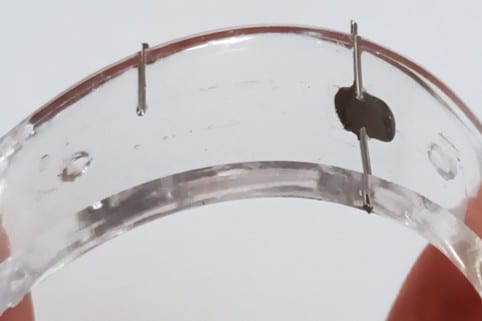
Image credit: Saba Firouznia
Researchers at the University of Bristol, working with collaborators from North Carolina State University, have developed a technique that significantly increases the performance of soft robotic systems by using a charged liquid metal droplet. The approach enhances the output of an electrocapillary enhanced magnetohydrodynamic pump, enabling artificial muscles and wearable devices to generate substantially greater force and movement without increasing mechanical complexity.
Soft robotic systems often face a trade off between performance and size, as higher force typically requires larger actuators, pumps, or power sources. The method addresses this limitation by manipulating the surface tension of a liquid metal droplet using a low electrical voltage. Instead of redesigning the system with additional hardware, the researchers improved the pump’s performance through changes at the liquid metal interface, creating a more compact and energy efficient solution.
The study showed that applying just 0.5 V to 2 V increased the pump’s output by up to 3.5 times while requiring only a negligible increase in electrical charge. The liquid metal droplet continuously changes shape to drive fluid flow, and the electrical input modifies its surface properties to amplify pressure and flow. The technology could support insect inspired soft robots, wearable rehabilitation devices, drug delivery systems, lab on a chip platforms, and other compact biomedical technologies where space and energy efficiency are critical.
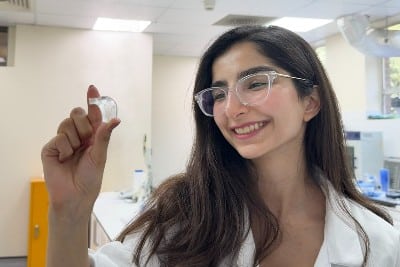
The researchers previously demonstrated the technology in a wristwatch sized wearable that powered a fluidic skin for ultraviolet protection. The latest findings suggest the same principle could improve the performance of a broader range of soft robotic and assistive systems.
Lead author Saba Firouznia, Research Associate at the University of Bristol Soft Robotics Lab, says, “The pump uses a droplet of liquid metal as its active component, which continuously shapeshifts to generate fluid flow. We improved its performance by simply manipulating the physics of the liquid metal interface, avoiding the need to add any mechanical complexity.”
“The system can generate greater pressure and flow without requiring larger motors, compressors, or batteries. Overall, the work presents a new way to amplify fluidic power in soft machines, which paves the way for more capable soft robots, wearable devices, and compact biomedical technologies,” says Jonathan Rossiter, Professor of Robotics and Head of the Soft Robotics Research Group at the University of Bristol.

