




HomeElectronics NewsMLCCs With The Industry's Highest Capacitance

MLCCs With The Industry’s Highest Capacitance

The 1 µF, 100 V capacitor helps 48-V systems use less space, fewer parts, and makes power design easier in electronics.
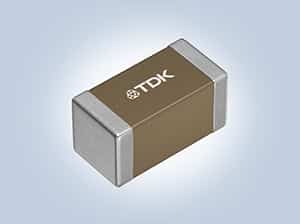
The actual appearance of the product differs from the image.
TDK logo is not stamped on the actual product.
The actual appearance of the product differs from the image. TDK logo is not stamped on the actual product.

TDK Corporation has added a 1 µF, 100 V-rated MLCC to its C series of commercial multilayer ceramic capacitors. It comes in a compact 1608 size and uses X7R dielectric material, which offers stable performance under temperature and voltage changes. This is currently the highest capacitance available in the industry for this voltage and size class.

- Advertisement -

The product entered mass production in June 2025. It is designed mainly for input capacitor use in power supply ICs that operate in commercial and industrial 48-V systems. These systems are common in AI servers, energy storage systems, and factory equipment.

The company claims to achieve this performance by improving the ceramic material and internal structure, allowing the new MLCC to store more charge in the same small package.

Compared to older products in the same size, this MLCC delivers ten times the capacitance. This means designers can meet power requirements using fewer components, which simplifies circuit design and layout.

- Advertisement -

The 100 V rating supports the growing demand for MLCCs that can handle higher voltages in compact spaces, especially as 48-V systems become more common in computing and industrial applications.

As part of the C series, the new MLCC benefits from the same reliability and manufacturing quality seen across TDK’s capacitor portfolio. TDK also plans to expand the series with more products in the future to meet changing application needs.

By offering high capacitance in a small size, the new MLCC helps reduce the number of capacitors needed on a board. This saves PCB space, cuts the total component count, and can lower manufacturing costs.

Fewer components also mean simpler assembly and better reliability, supporting efforts to miniaturize devices and improve power system efficiency in high-density electronics.


Nidhi Agarwal
Nidhi Agarwal
Nidhi Agarwal is a Senior Technology Journalist at Electronics For You, specialising in embedded systems, development boards, and IoT cloud solutions. With a Master’s degree in Signal Processing, she combines strong technical knowledge with hands-on industry experience to deliver clear, insightful, and application-focused content. Nidhi began her career in engineering roles, working as a Product Engineer at Makerdemy, where she gained practical exposure to IoT systems, development platforms, and real-world implementation challenges. She has also worked as an IoT intern and robotics developer, building a solid foundation in hardware-software integration and emerging technologies. Before transitioning fully into technology journalism, she spent several years in academia as an Assistant Professor and Lecturer, teaching electronics and related subjects. This background reflects in her writing, which is structured, easy to understand, and highly educational for both students and professionals. At Electronics For You, Nidhi covers a wide range of topics including embedded development, cloud-connected devices, and next-generation electronics platforms. Her work focuses on simplifying complex technologies while maintaining technical accuracy, helping engineers, developers, and learners stay updated in a rapidly evolving ecosystem.

SHARE YOUR THOUGHTS & COMMENTS

EFY Prime

Unique DIY Projects

Electronics News

Truly Innovative Electronics

Latest DIY Videos

Electronics Components

Electronics Jobs

Calculators For Electronics
