Space systems need reliable data. This device can make communication faster, safer, and works in tough conditions. Find out more!
When we work on space systems, communication interfaces are crucial. They make sure our data flows reliably and efficiently, so we can control systems in real time, integrate different subsystems, and catch errors quickly. They also let us design systems that can grow, stay redundant, and tolerate faults, everything we need to succeed in space missions.
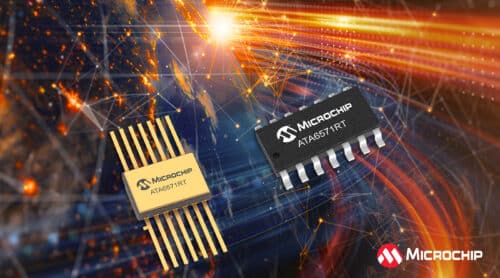
Microchip Technology has introduced the ATA6571RT CAN FD Transceiver, a high-reliability solution built specifically for space. This transceiver can handle flexible data rates up to 5 Mbps, which is perfect for satellites, spacecraft, and other space systems that need robust and efficient communication. Compared with traditional CAN solutions, usually limited to 1 Mbps, it can carry larger payloads, up to 64 bytes per frame, making data transfer more efficient and reducing bus load. And because it’s backward compatible with classic CAN, we can integrate it into existing systems without major changes.
It also gives us stronger error detection with its Cyclic Redundancy Check (CRC), which is vital for safety-critical applications. We can use it for platform data handling, propulsion system control, sensor bus management, robotics, and on-board computers for nanosatellites. On the PCB side, integration is easier because this RT device keeps the same pin layout as the original COTS plastic or ceramic versions.
The transceiver is built to survive harsh space conditions, handling Single-Event Effects (SEE) and Total Ionizing Dose (TID). It supports low-power management with local and remote wake-up and adds short-circuit and overtemperature protection.
This transceiver strengthens the company’s commitment to delivering reliable, secure, and high-performance solutions for demanding environments. It’s part of a wider portfolio of aerospace and defense communication interfaces, including radiation-tolerant and radiation-hardened Ethernet, MIL-STD-1553, and SpaceWire.