The mission combines radar and visual imaging systems while examining distributed compute models across interconnected satellites in orbit.
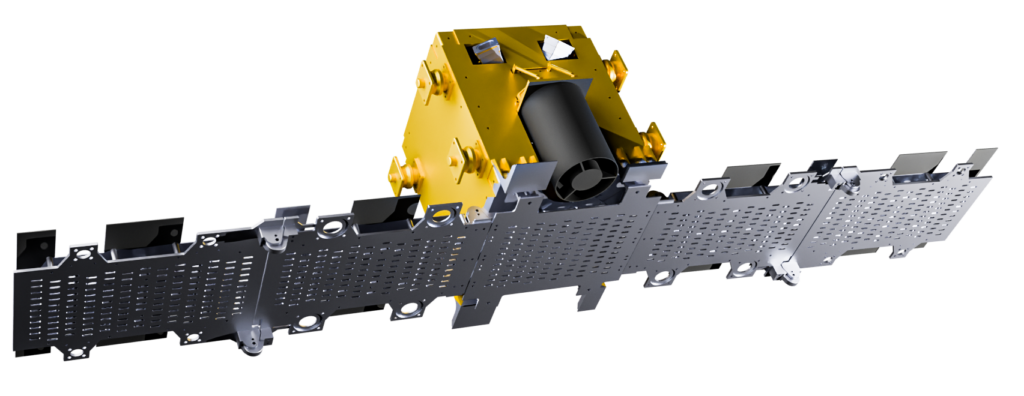
GalaxEye has outlined plans for Mission Drishti, a satellite built around its SyncFused OptoSAR architecture. The design integrates Electro Optical and Synthetic Aperture Radar sensors on the same spacecraft, bringing together two imaging methods that have traditionally operated separately.
Electro Optical systems capture high resolution visual imagery but depend on daylight and clear weather. SAR systems, by contrast, enable imaging in darkness and through cloud cover, though with different data characteristics. By fusing both sensor types at the hardware and data levels, the architecture is intended to reduce the trade off between image clarity and all weather availability, supporting more consistent Earth observation across operating conditions.
The satellite is powered by the NVIDIA Jetson Orin, allowing advanced AI models to run directly in orbit. Processing data onboard can shorten the path from image capture to interpretation, with the aim of moving toward near real time analytics rather than relying entirely on ground based processing.
Mission Drishti will also be used to explore Orbital Data Centres, a concept in which multiple satellites function as interconnected compute nodes. Lessons from this effort are expected to inform future satellite constellations with attention to scalability and distributed processing. Development work includes the use of NVIDIA Nemotron open models and NVIDIA Cosmos world foundation models.
Suyash Singh, CEO of GalaxEye, says, “Taking NVIDIA Jetson Orin to space aboard Mission Drishti is a defining milestone for GalaxEye. Building on our successful in-space demonstration in 2024, we’re advancing to a next-generation of Earth Observation satellites—using OptoSAR technology for advanced high resolution imaging and building Orbital Data Centers to generate and deliver intelligence from Orbit.”