As vehicles add more electronics, new regulators reduce standby current and help batteries last longer when vehicles are parked.
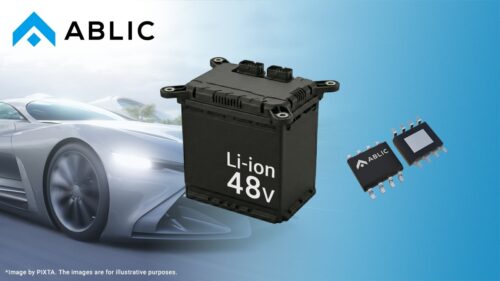
ABLIC Inc. has expanded its 48V automotive power portfolio with the introduction of the S-19230/1 Series low-dropout (LDO) regulators, designed to help automotive engineers reduce ignition-off standby current in next-generation vehicle platforms. The devices target 48V electronic control units (ECUs), combining a typical operating current of just 2.0 µA, an 80V absolute maximum input rating, integrated open-loop protection, and AEC-Q100 qualification.
The series addresses minimise operating current while maintaining the voltage tolerance needed for 48V automotive systems. In addition to its low-power operation, the regulator integrates open-loop protection in adjustable-output versions to prevent output overvoltage if an external feedback resistor fails. By embedding this protection within the IC, designers can reduce external circuitry while improving system reliability and simplifying fault management.
The LDO regulators are only one part of ABLIC’s expanding 48V roadmap. The company is extending its ultra-low-power analog technology into additional product categories, including DC-DC converters optimized for high efficiency under light-load conditions and 48V battery monitoring ICs capable of directly detecting voltage thresholds on 48V rails. These devices are intended to reduce standby power, minimize external component count, and improve overall power management across 48V vehicle architectures.
The expansion comes as 48V electrical systems are becoming more common across the automotive industry. Although battery electric vehicle (BEV) adoption has progressed at a slower pace than expected, the shift toward 48V architectures is accelerating across multiple vehicle types as electrical power demand continues to increase. Higher system voltage enables the same amount of power to be delivered with significantly lower current than traditional 12V systems, allowing lighter wiring harnesses, lower copper usage, improved efficiency, and greater flexibility in vehicle packaging.
However, moving to 48V also changes power management priorities. With more ECUs and communication gateways operating continuously in standby mode, ignition-off current has become an important system-level design metric. Even small reductions in quiescent current at the component level can translate into measurable improvements in battery retention and vehicle availability after extended parking.
Click here for the original announcement.