




A new 5.5V, 4A synchronous buck converter with an I²C interface is pushing automotive point-of-load designs toward higher efficiency, tighter control, and smaller footprints.
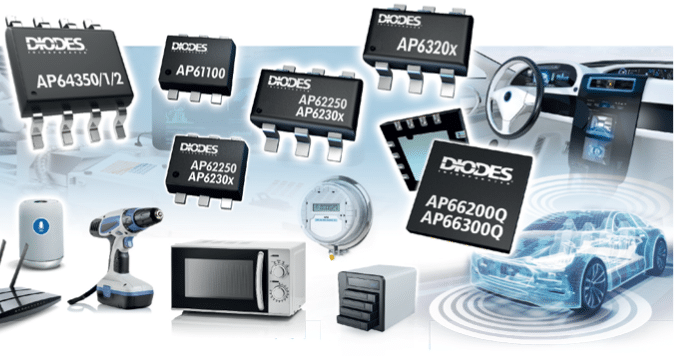
The latest entrant in the low-IQ synchronous buck space by Diodes Incorporated is aimed squarely at next-generation automotive point-of-load (POL) systems where infotainment, ADAS modules, instrument clusters, and telematics demand quieter power stages, smaller PCB area, and firmware-configurable behavior. The device brings a 5.5V, 4A profile combined with an I²C-configurable architecture, signaling a shift toward software-defined power rails in vehicle electronics.
The key features are:
- I²C 3.0 control interface up to 3.4MHz
- Programmable modes, currents (1–4A), and frequencies (1–2.5MHz)
- 20mV-step output voltage adjustment with fault reporting
- Low-IQ 20µA operation with PFM/PWM flexibility
- Integrated MOSFETs with EMI-optimized gate-driver design
At the heart of the design is an I²C 3.0-compatible interface that runs up to 3.4MHz, enabling developers to tune power stages without hardware changes. Parameters configurable over the bus include operating mode (PFM/PWM), switching frequency (1MHz to 2.5MHz), and current limits (1A to 4A). Output voltage can be trimmed in 20mV steps useful for tightly regulated digital loads and the device also sends back fault status, giving system controllers visibility into rail health.
The converter’s compactness is anchored by a W-QFN1520-8/SWP package (Type UX), designed to handle high ambient temperatures typical of automotive interiors. A proprietary gate-driver scheme reduces switching-node ringing without stretching MOSFET transition times, a common tradeoff in EMI-sensitive automotive layouts. The result is lower radiated noise at high frequencies, easing EMC design pressure. On the power stage, an input range of 2.3V to 5.5V supports modern low-voltage automotive subsystems. Integrated MOSFETs75mΩ (high-side) and 33mΩ (low-side)drive high-efficiency DC-DC conversion, while a constant on-time architecture keeps the external component count low and ripple minimized. The multi-function enable pin selects between low-IQ operation (20µA) for standby-heavy systems or fixed PWM for consistent ripple across load transitions.
Additional system-level features include a ±5% power-good window, built-in pull-up resistor to reduce BOM, and a full protection suite covering UVLO, OVP, peak/valley current limiting, short-circuit protection with both MOSFET current sensing paths, and thermal shutdown. A non-automotive variant with standard compliance is also available for industrial and consumer power designs.


