The robot arm helps people with disabilities make food. It holds things of different shapes and sizes, like sauce, cheese, and small toppings.
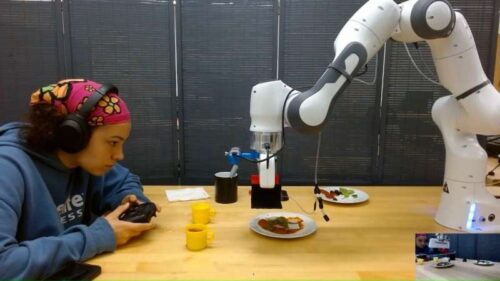
Researchers at Virginia Tech have developed a robotic arm that can assist people with disabilities in performing everyday tasks like cooking. The system uses a joystick for input and artificial intelligence to understand the user’s intent. In recent tests, the robot was able to make a pizza—handling ingredients of different shapes, sizes, and textures—with human support.
The breakthrough came from redesigning the robot’s gripper. Earlier versions struggled with common kitchen items. Soft grippers couldn’t lift heavier objects, while rigid ones had trouble picking up small or delicate ingredients like sprinkles or shredded cheese. To solve this, the team created a hybrid gripper that combines a rigid base with a soft, bubble-like fingertip. This fingertip uses switchable adhesives to temporarily grip and release objects with control.
To test the new design, researchers began with a fun task: building an ice cream sundae. The robot initially failed to handle items like marshmallows and sprinkles. But with the new gripper, it could complete the entire process. Encouraged by this result, the team moved to the more complex task of making a pizza. The robot successfully picked up a metal pan, spread dough, and added sauce and toppings, thanks to the improved grip.
This research highlights the challenges robots face in helping with everyday activities. Unlike industrial tasks, home environments require flexible handling of a wide range of objects. The goal is to create assistive robots that can adapt to such tasks and help people live more independently.
The work is funded by the National Science Foundation and shows how combining AI with smart hardware can bring practical robotic help into homes. The team aims to continue developing systems that respond to real-world needs and handle more personal, daily tasks.