A tool that can strip away complex CAD layers, revealing PCB signals instantly and hinting at a shift in how engineers access hidden design data.
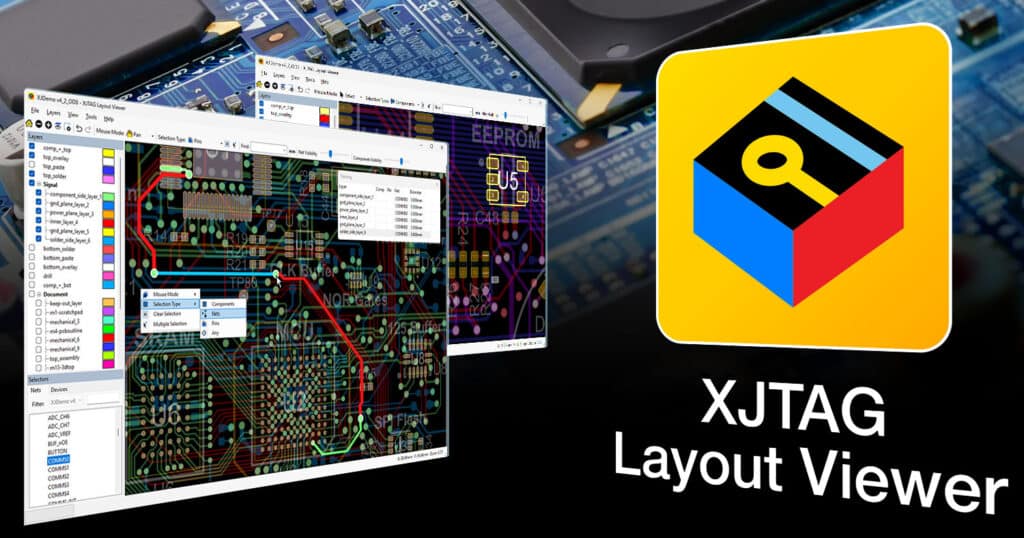
XJTAG has launched a free standalone PCB layout viewer designed to work with ODB++ data, enabling engineers to inspect and navigate board designs without relying on full CAD environments.
The tool can address a common challenge in hardware development and testing workflows, where accessing layout data often requires complex design software or restricted environments. By providing a lightweight desktop solution, the viewer allows engineers to quickly locate signals, components, and pins directly on the PCB layout, supporting faster debugging, validation, and hardware bring up processes.
From a usability standpoint, the software can focus on simplicity and speed. It can enable netlist aware search, allowing users to identify and highlight specific nets, components, or pins across complex board designs. GPU accelerated rendering ensures smooth navigation even in dense layouts, while the standalone architecture removes the need for integration with larger toolchains. This makes it particularly useful for manufacturing test engineers, field diagnostics teams, and developers working directly with physical hardware.
The viewer is built specifically around ODB++ data, leveraging embedded netlist and component information to provide clear visualization of board structure and connectivity. By bridging the gap between design data and real world hardware inspection, it supports faster issue identification and reduces dependency on design teams for layout access.
“Engineers working with real hardware often need a simple way to answer one question quickly: where is this signal on the board?” said Simon Payne, CEO at XJTAG. “This viewer is built specifically for that moment – no setup, no complexity, just immediate access to the layout through the netlist.”
The release reflects a broader trend toward more accessible and task specific engineering tools, aimed at improving efficiency across development, testing, and diagnostics workflows.
Click here for the official announcement.