Researchers resolve long standing inconsistencies in transverse thermoelectrics, opening a clearer path toward compact solid state refrigeration without moving parts.
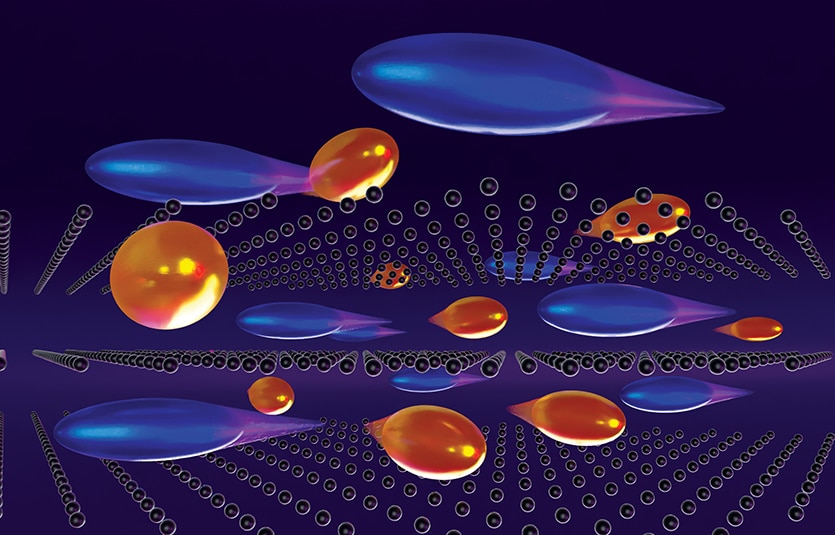
As electronics scale down and computing demands grow, the need for compact and efficient cooling technologies is becoming increasingly urgent. Today, applications such as infrared sensing, superconducting systems, and emerging quantum devices still rely on bulky cryogenic refrigeration based on liquid nitrogen or helium, technologies that are energy intensive and difficult to miniaturize. Solid state refrigeration offers a potential alternative, but progress has been limited by an incomplete understanding of the materials involved.
Researchers at Northwestern Engineering have taken a major step toward solving this challenge by developing a new framework to understand and optimize transverse thermoelectric materials. Led by Professor Matthew Grayson, the work addresses a long standing puzzle in transverse thermoelectric, a class of unusual semiconductor crystals that can convert electricity directly into cooling power without moving parts.
The team discovered that a key material parameter, the electronic band gap, changes significantly with temperature in transverse thermoelectric. While temperature dependent band gaps are known in conventional semiconductors, the effect is usually minor. In transverse thermoelectric materials, however, the band gaps are so small that their temperature driven changes are comparable to the gap itself, fundamentally altering how charge carriers behave. This insight explains why earlier models failed to accurately describe experimental results.
In addition to identifying the problem, the researchers introduced a new experimental method to directly extract the temperature dependent band gap from electrical measurements. The approach was validated using two distinct experimental datasets from the transverse thermoelectric material Re4Si7, showing strong agreement across different behaviours. Complementary theoretical calculations by collaborators further confirmed the findings.
Key outcomes of the research include:
• Framework for modelling transverse thermoelectric materials
• Direct measurement of temperature dependent band gaps
• Improved understanding of mixed electron and hole transport
• A pathway to optimise solid state cooling materials
Matthew Grayson, Professor of Electrical and Computer Engineering at Northwestern University, says, “Without this analysis, prior studies were attributing material behaviour to the wrong physics. With the correct framework, these materials can finally be characterized and improved.”