A hybrid cooling method can cut dielectric liquid use while maintaining stable battery temperatures during rapid charging. How?
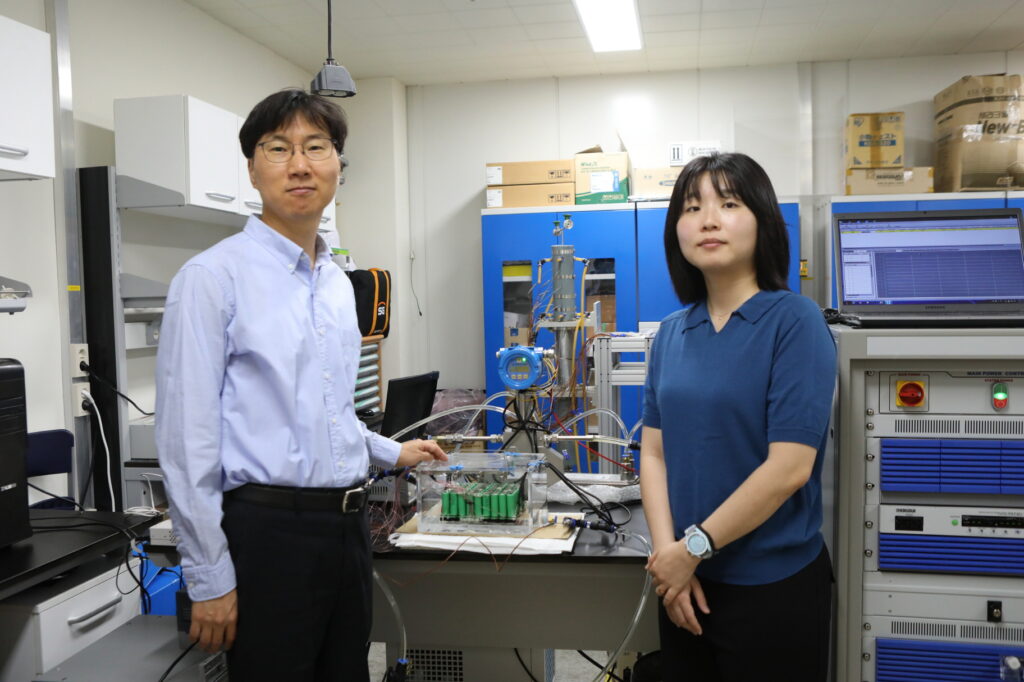
Researchers at the Korea Institute of Machinery and Materials (KIMM) have developed a spray-based immersion cooling technology that improves thermal management of lithium-ion battery packs while significantly reducing the amount of dielectric liquid required. The system combines direct spray cooling with partial immersion to maintain stable battery temperatures during rapid charging and discharging, while lowering the risk of thermal runaway and fire.
The technology addresses limitations of conventional battery cooling methods. Air- and liquid-cooled systems typically rely on indirect heat transfer through heat sinks or cold plates, which can struggle under high thermal loads. Although full-immersion cooling offers better heat removal by placing battery cells in direct contact with dielectric liquid, it increases system weight, cost and liquid consumption. The newly developed approach uses only 10–20% of the dielectric liquid required by conventional immersion cooling systems while delivering comparable or improved cooling performance.
The cooling system sprays dielectric liquid onto the top of the battery pack while keeping the lower section partially immersed. This combination of direct spray cooling and immersion-based forced convection enables efficient heat removal from battery cells. During testing on an actual lithium-ion battery pack, the researchers maintained maximum cell temperatures below 35°C under a 4C charge-discharge rate, representing fast charging and discharging conditions.
Beyond improving thermal stability, the reduced liquid requirement lowers overall system weight and operating costs. The non-flammable dielectric liquid may also help suppress fires if thermal runaway occurs, making the technology suitable for electric vehicles as well as large-scale energy storage systems and data centre energy storage applications. The research team also identified key thermophysical properties of dielectric liquids and plans to use AI-based optimisation techniques to discover new cooling fluids with improved performance.
“The spray-based immersion cooling technology can effectively cool lithium-ion battery packs and reduce the risks of thermal runaway and fire using only a small amount of dielectric liquid,” says Dr Jinsub Kim, Principal Researcher at the Heat Pump Research Center, Korea Institute of Machinery and Materials.