

A new set of compact synchronous-rectifier controllers has surfaced that could shrink board space and boost efficiency across chargers and adapters using flyback topologies.
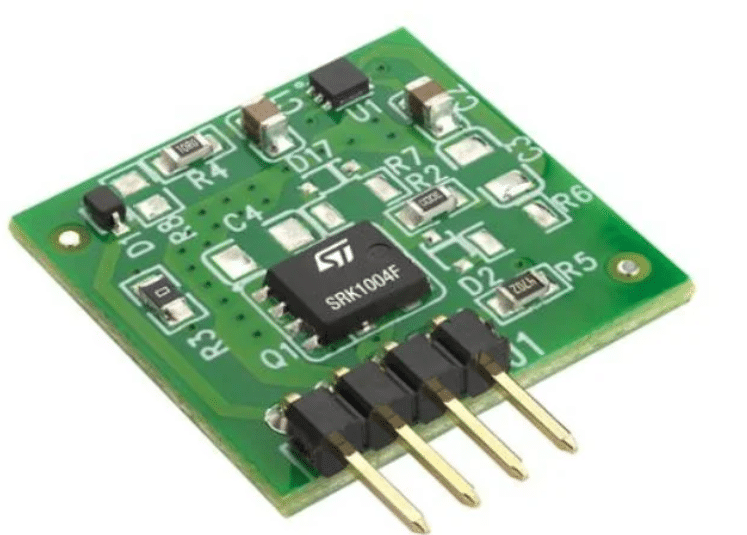
Engineers working on high-density power supplies are getting a fresh option to refine secondary-side rectification. The latest tiny synchronous-rectifier controllers by STMicroelectronics target non-complementary active-clamp, resonant and quasi-resonant flyback converters architectures widely used in USB power delivery chargers, wall-plug adapters and other switch-mode power supplies.
The key features are:
- Ultra-compact synchronous-rectifier controller footprint for dense power stages.
- Secondary-side MOSFET driving with precise on/off timing to reduce diode conduction losses.
- Multiple variants with logic- or standard-level gate drives and configurable turn-off delay.
- High-voltage drain sensing and defined turn-on window for robust operation.
- Gate driver capable of moderate source/sink current for fast transitions.
At just a few square millimeters, the controllers are optimized for modern high-frequency designs, enabling smaller magnetic components without sacrificing efficiency. They replace traditional diodes in the output stage with a MOSFET-driven scheme that minimizes conduction losses by switching the device precisely when current flows and turning it off as it decays to zero.
Multiple variants let designers tailor the controller to their MOSFET choices and layout needs: options span logic-level and standard-level gate drives, as well as different turn-off delay settings to compensate for parasitic inductances in the drain path. A well-defined turn-on window improves robustness, preventing erroneous switching during idle or ringing intervals often seen at light load or near the boundary of conduction modes.
Voltage sensing on the MOSFET drain allows the controller to align switching with transformer demagnetization under various conduction conditions, which directly translates into lower switching losses and improved overall efficiency compared with diode-only rectification. The gate driver itself can handle moderately high charge devices, sourcing and sinking current aggressively to cut transition times.
Designers will find these controllers in compact boards where space is at a premium and energy standards push efficiency targets ever higher. Alongside the devices, evaluation boards are available to accelerate prototyping and performance tuning.