

A new ultra-efficient finger-worn mouse from University of Tokyo researchers redefines human–computer interaction with weeks-long battery life and precision control for AR and VR environments.
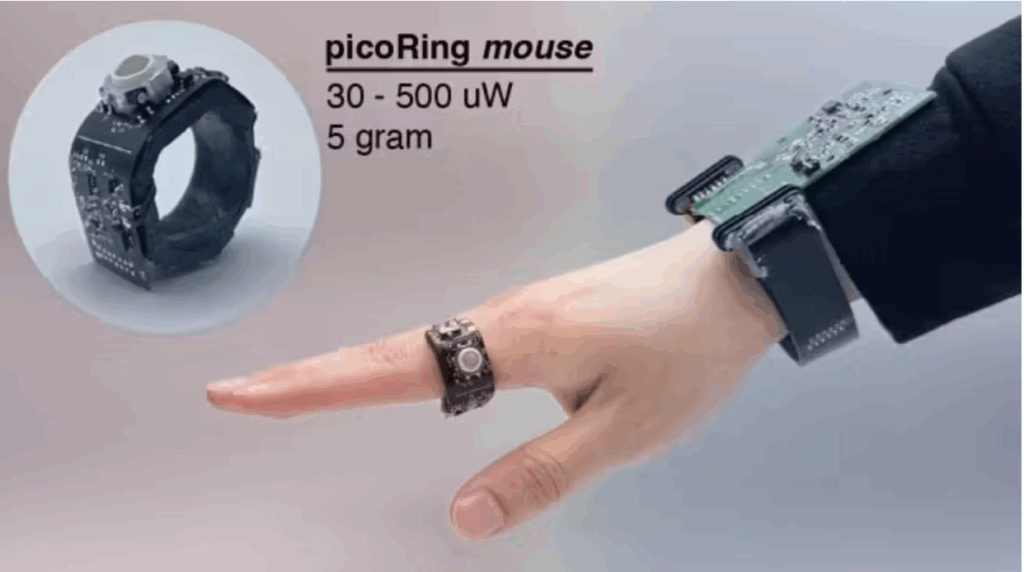
In a field where innovation often means shrinking devices while expanding capability, researchers at the University of Tokyo have unveiled picoRing — a miniature, ultra-low-power ring mouse that transforms a finger into a precise input device for computers and virtual environments.
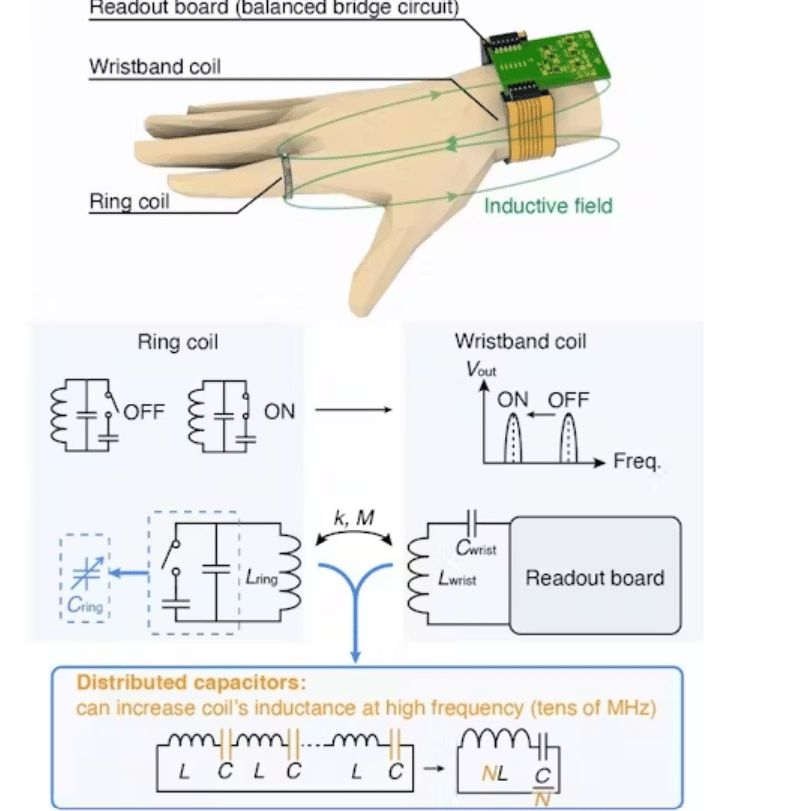
Unlike bulky or short-lived wearable mice, picoRing stands out for its remarkable energy efficiency, operating 600–1,000 hours on a single 27 mAh charge. That’s weeks of use before recharging — a milestone achieved through inductive telemetry, which transfers data via electromagnetic coupling instead of traditional wireless protocols like Bluetooth. This novel semi-passive communication consumes only a few hundred microwatts — a fraction of conventional systems.
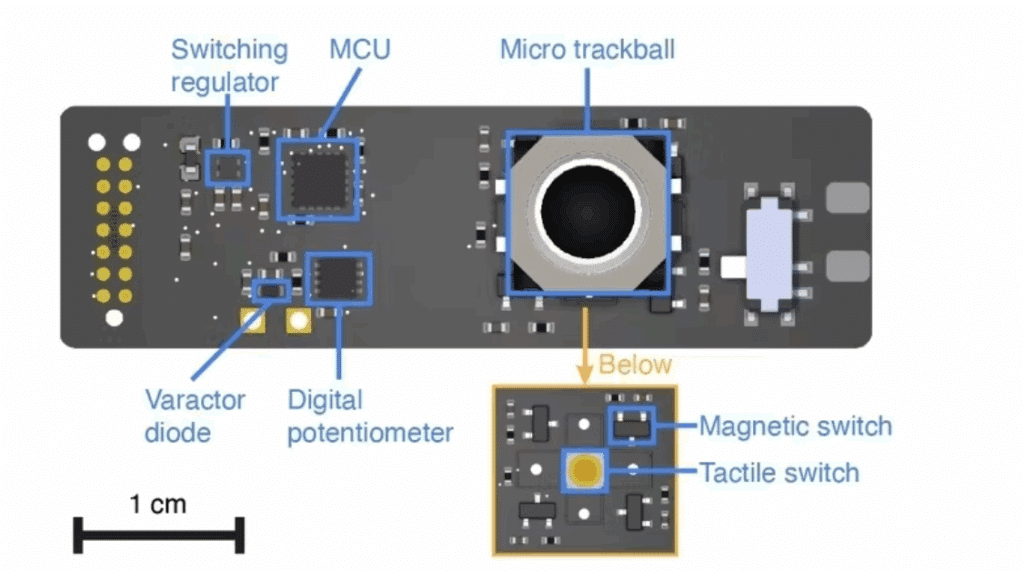
Weighing just five grams, the ring houses an eight-turn resonant coil with distributed capacitors and a miniature trackball module. As the wearer scrolls or presses, embedded magnets and tactile switches register motion, while a microcontroller translates the action into signal variations detected by a matching coil in a wristband receiver. The wristband, though still in prototype form, acts as a bridge between the ring and connected devices such as computers or VR headsets.
By eliminating frequent charging and bulky controllers, picoRing offers a seamless, always-on interface — particularly valuable for AR and VR applications, where traditional input devices are cumbersome. The system effectively merges physical and digital gestures, allowing users to navigate immersive environments or perform precision pointing tasks with a flick of the finger.Beyond its immediate use in virtual control, the researchers envision picoRing as a platform for multifunctional wearables, capable of integrating health and biometric sensors for stress, heart rate, or gesture recognition.

While it may not replace the trusty desktop mouse yet, picoRing points toward a future where human–machine interaction becomes invisible — and effortlessly wearable.