





A fully compostable alternative to conventional circuit boards using wood-based materials—promising a future where electronic waste could literally return to the earth.
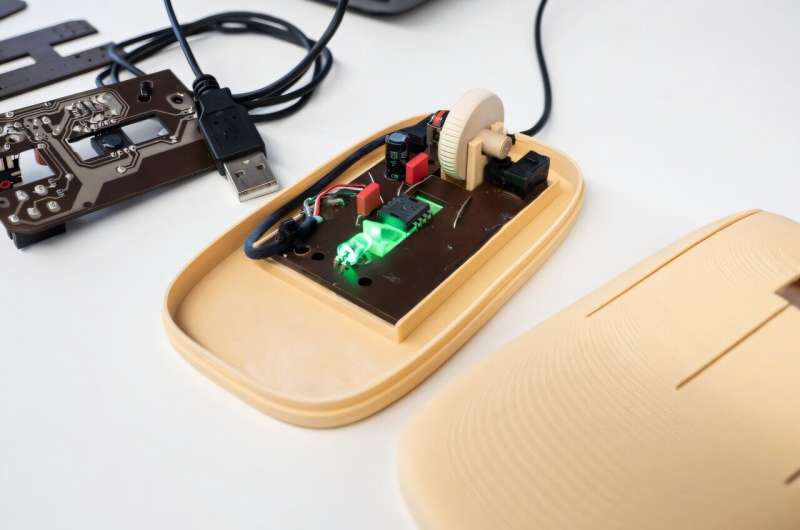
Printed circuit boards, the backbone of all electronic devices, typically rely on fiber-reinforced epoxy resins derived from fossil fuels. These composites are non-recyclable and require costly, high-temperature disposal methods, contributing to mounting e-waste challenges worldwide. The Empa-led team, under the EU’s HyPELignum project, has unveiled a wood-derived alternative that not only performs comparably to standard epoxy PCBs but also decomposes naturally under composting conditions.
Scientists from Empa, the Swiss Federal Laboratories for Materials Science and Technology, have developed biodegradable printed circuit boards (PCBs) crafted from wood-based materials—offering a potential eco-friendly replacement for traditional petroleum-based substrates.
PThe key lies in a material known as lignocellulose—a brownish residue left over after extracting lignin and hemicellulose from wood. Traditionally considered waste, this natural mixture of cellulose fibers and lignin has been transformed into a high-performance substrate. The process involves grinding the lignocellulose with water into a fine fibril network, compressing it under high pressure, and allowing it to “hornify” into a solid sheet. The embedded lignin acts as a natural binder, providing mechanical strength and stability.
While the resulting boards are slightly more sensitive to humidity than conventional ones, their biodegradability depends on this property. Moisture allows microorganisms to break down the substrate once the device’s lifecycle ends. The research team has already demonstrated fully functional prototypes—such as a computer mouse and RFID cards—built on these eco-friendly boards. After use, the electronic components can be separated for recycling while the board itself can be composted.
The next step for the researchers is to improve water resistance without losing the material’s compostable nature. The team also plans to collaborate with European companies to scale production and explore broader industrial uses. If successful, this innovation could redefine electronic sustainability—bringing us closer to a circular economy where tomorrow’s gadgets leave no trace behind.

