A silicon polymer-based chip, which replicates human organ function to test drug safety and chemical toxicity without animal models.
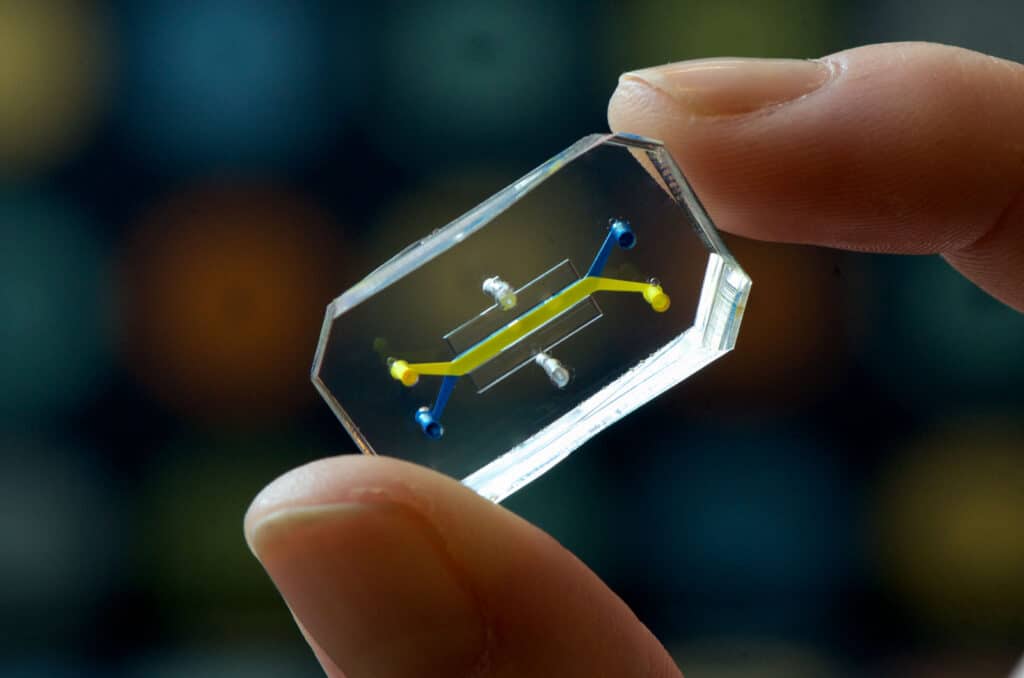
Organ-on-chip systems are miniaturised devices that replicate the physical and biological functions of human organs. Built from polymer materials such as PDMS (polydimethylsiloxane), these chips contain etched microchannels that mimic blood vessels and tissue environments. They are used to study how human cells respond to drugs, chemicals, or disease conditions without relying on animal models.
Each chip integrates live human cells such as liver, lung, or brain tissue, layered along the walls of the channels. A blood-like fluid is passed through these channels to simulate nutrient flow, waste removal, and mechanical forces like shear stress. The system enables researchers to monitor cellular reactions in real time under controlled conditions.
Chips are fabricated using soft lithography, a method that imprints microscopic patterns into PDMS. This silicone-based material is biocompatible, gas-permeable, and transparent, making it suitable for cell culture and optical observation. Some chips also include porous membranes to separate cell layers, or interface with sensors for electrical or chemical readouts.
In a recent study by US-based Emulate Inc., which uses liver and immune cells to identify drug-induced liver injury (DILI). The chip demonstrated 87% accuracy in detecting toxic compounds in lab testing and 100% accurate in flagging those that don’t.
Machine learning is also being developed to predict toxic responses from molecular structure. Tools such as OPERA, trained on regulatory and public datasets, are being designed to forecast chemical safety metrics traditionally based on animal models.
Regulators such as the FDA, EPA, and NIH are assessing whether organ-on-chip platforms can be used in preclinical safety testing. These devices fall under a broader category known as microphysiological systems (MPS). Though not electronic chips in the semiconductor sense, organ-chips are increasingly seen as part of a future toolkit for drug discovery and toxicology.