By weakening the ice-glass bond with precise pulses, the system clears windshields quickly without heating the entire cabin, improving efficiency in cold weather.
Defrosting vehicle windshields has traditionally relied on redirecting excess engine heat, a method that distributes warmth unevenly and consumes significant energy. As electric vehicles replace combustion engines, this waste heat is no longer available, forcing defrosting and defogging systems to draw directly from the battery. Sealed vehicle cabins further increase fogging, making conventional HVAC based approaches inefficient and reducing driving range in cold conditions.
Betterfrost Technology has developed an automotive glass defrosting approach that clears ice using pulsed electrical energy rather than cabin heating. The system is designed to remove ice from windshields and windows in under one minute while using significantly less energy than traditional defrost methods.
The approach is based on the principle that ice does not need to be fully melted to be removed. Controlled electrical pulses are delivered through conductive coatings already present on modern automotive glass, creating a thin quasi liquid layer at the interface between the ice and the glass. This weakens the bond holding the ice in place, allowing it to release quickly without heating the entire windshield. Because energy is applied uniformly across the glass surface, the method reduces thermal stress and lowers overall heating demand, helping preserve battery range in cold weather.
Key features of the technology include:
- Windshield defrosting in about 60 seconds
- Even heat distribution across the glass surface
- Reduced cabin heating demand in cold conditions
- Elimination of bulky air ducts and blower motors
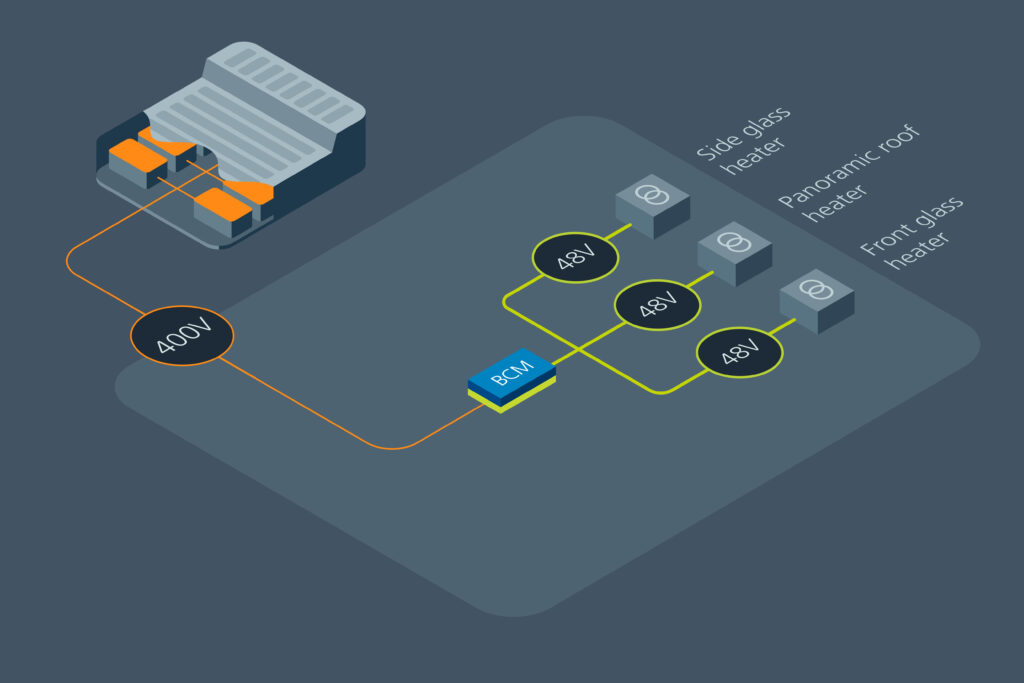
- 48V power delivery architecture converts high voltage battery input into pulses
- Vicor BCM6135 to fix ratio DC-DC bus converter, converting 800V/400V inputs to ~48V
- High power density and fast response to load changes
- Compact size and automotive safety compliant
By focusing on weakening the ice glass bond rather than heating large volumes of air, the technology demonstrates a more efficient approach to de-icing in energy constrained systems.