Tuesday, December 9, 2025

“Embedded System Engineers Need Strong Software Skills Along With Enough Hardware Knowledge”

What if every engineering student could build products that power the next generation of smart devices? Jayakumar Balasubramanian and Maaz Jukaku from Emertxe shared how hands-on learning and real-world systems can turn learners into industry-ready innovators in a recent conversation with Rahul Chopra and Nidhi Agarwal from Electronics For You.
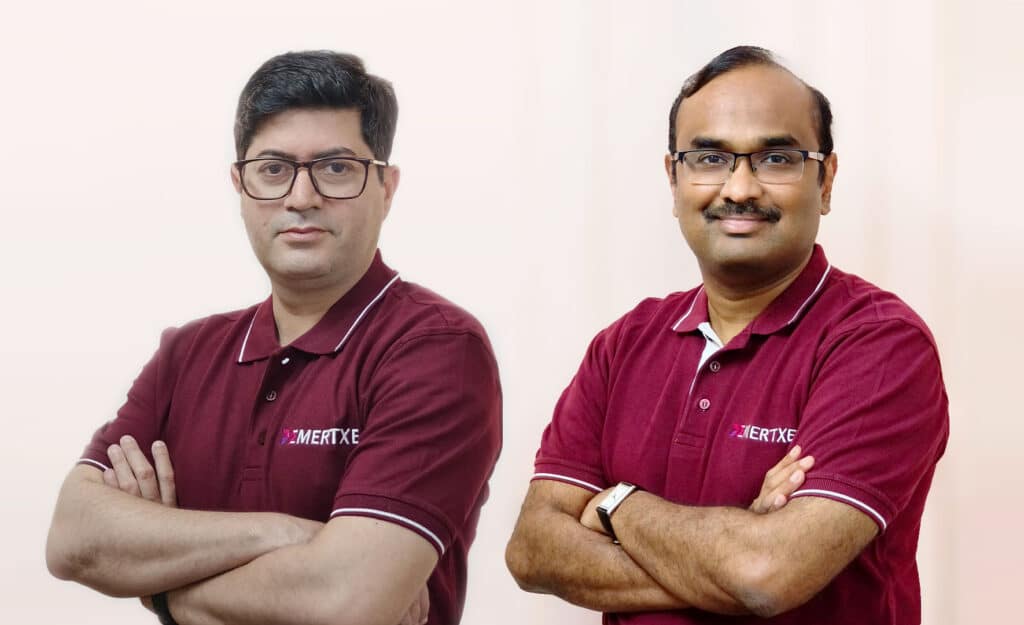

Maaz Jukaku, Managing Director at Emertxe and Jayakumar Balasubramanian, Director at Emertex

Q. What is an embedded systems engineer? For instance, if I build Arduino projects, does that make me one, or am I still just a software developer?

A. An embedded system combines customised hardware and software to perform a specific function or a defined set of functions. Anyone who can design and build such systems is considered an embedded systems engineer, although the level of expertise can vary from simple systems such as timers to advanced systems used in electric vehicles (EVs) or smart cities. Arduino makes it easy to begin learning how hardware and software work together, but working only on Arduino systems does not make someone an embedded systems engineer. It serves as an introduction to the core concepts.

- Advertisement -

To become a professional, growth comes from learning bare-metal programming on microcontrollers such as STM32 or ARM, using languages such as C or C++, understanding communication protocols, and working on domain-specific applications including automotive, medical, or industrial systems. As learners advance, they can work with real-time operating systems such as FreeRTOS or embedded Linux, which are used in systems such as car dashboards and automation devices. Strong fundamentals in problem-solving, algorithms, optimisation, and programming are essential. Start small, build the foundation, move to advanced tools and operating systems, and eventually specialise in a field such as IoT, robotics, or automotive to become a professional embedded systems engineer.

Q. How should I train for embedded systems? Is Arduino enough, or do I need deeper skills?

A. As I mentioned earlier, programming an Arduino is merely the starting point. To excel in embedded systems, strong problem-solving skills, algorithmic thinking, and solid fundamentals are essential. It is similar to driving a car: the model does not matter as much as knowing the basics such as the accelerator, brake, and clutch. Similarly, boards and tools are enablers; what counts is understanding the core concepts. Focus on algorithms, optimisation, programming in C, bare-metal microcontroller coding, and embedded Linux. Take a top-down approach, decide what product to build, and learn the skills required for it. Explore fields such as automotive, consumer electronics, healthcare, or logistics. Building and showcasing a working solution helps the learner become industry-ready.

Q. Is embedded systems engineering mostly about software and less about electronic circuitry?

A. Yes, today it is mostly software-focused because smart features in devices are software-driven. However, knowing hardware basics remains important. Engineers do not need to design circuits or chips, yet they must understand how hardware works, read datasheets, and interface with parts such as sensors, motors, and displays. For instance, when building a robotic arm, the engineer may not design the board, but must program the controller, communicate with servo motors, and interpret their signals.

- Advertisement -

In short, an embedded engineer needs strong software skills and sufficient hardware knowledge to make both work together. It begins with learning to read and apply datasheets and using that understanding to build functional systems.

Q. Reading a datasheet is for both the board and components, correct?

A. An embedded systems engineer should be able to read the datasheet of the entire board as well as the datasheets of the individual components used on it. This includes understanding the pin-level details of the microcontroller or processor and knowing how each pin functions and interfaces with other peripherals. Being comfortable with both board-level and component-level datasheets is essential for effective embedded software development.

Q. Do engineering curricula teach students how to read and interpret datasheets, or is this a skill learned through specialised training programmes?

A. Many students claim experience in embedded systems because they have completed systems during their studies, but these are often not developed at the level the industry expects. They might know how to make something work using existing libraries or prebuilt code, but they usually lack a deeper understanding of how to read a datasheet, interpret it, and build software that interacts correctly with hardware at the pin and signal level.

So, to answer your question directly, this skill is generally not taught in college. Students typically begin learning it only when they join specialised training programmes or work in environments that emphasise real industry practices. Institutions such as ours focus on addressing this gap, helping students learn how to interpret datasheets, analyse board layouts, and connect their software design with the underlying hardware.

Q. What skills do students need to become industry-ready?

A. Students become industry-ready by focusing on two essential areas: building skills and creating a strong portfolio. First, focus on skill development through practical assignments in areas such as bare metal programming, communication protocols, Linux internals, and embedded Linux application development. Second, build a solid portfolio. Skills matter only when backed by meaningful projects that show your ability to apply knowledge to real problems. Choose projects that reflect your understanding of microcontrollers, protocols, and how hardware and software interact.

Domain-specific knowledge also plays a key role, for example, CAN or SPI in automotive applications and MQTT or COAP in IoT applications. Combining these skills and applying them through structured systems strengthens real-world problem-solving capability. By graduation, students should ideally have hands-on experience comparable to a professional. Strong skills supported by a relevant system portfolio are what truly make students industry-ready.

Q. Do recruiters today still focus heavily on marks, or do they tend to overlook grades if a candidate has strong technical skills? 

A. Marks primarily serve as an entry filter for shortlisting curricula vitae. Once candidates reach the interview stage, problem-solving ability and technical depth take priority. With the growth of Global Capability Centres and Indian technology firms developing complete products, recruiters increasingly value hands-on capability and system contributions over grades.

A 7 to 8 CGPA is sufficient, but students should prioritise practical skills and real systems. Beginning early allows exploration of fields such as embedded systems or application software before specialising. Hackathons, internships, and open source participation help build credibility. A well-maintained GitHub profile often reflects consistency and skill more effectively than academic scores. Today, systems and problem-solving ability carry more weight than marks.

Q. For software developers, GitHub is a great place to showcase work. Is it the same for embedded systems engineers?

A. The code you write is part of the project, but the main difference between embedded systems and web development lies in how results are showcased. GitHub is valuable for embedded engineers, though its presentation differs from that of web developers. While web developers can easily host and display live systems on GitHub Pages, embedded engineers work with hardware that cannot always be displayed directly online. Instead, they can upload code, schematics, documentation, and demonstration videos. This approach still highlights coding skills, system organisation, and technical depth effectively.

Q. What is multi-entry/multi-exit in engineering? Do universities offer embedded systems courses now?

A. Engineering education has shifted from traditional branches towards deeper specialisation. Many universities now offer focused programmes in embedded systems, robotics, and IoT. These programmes may exist as dedicated streams or form part of flexible frameworks such as multi-entry/multi-exit systems. These allow students to build skills progressively, exit with relevant certifications if required, and re-enter later to continue their studies.

Q. Even with specialised engineering curricula now in place, do you still see a gap that students need to address? 

A. The engineering curriculum in India has traditionally been strong in terms of content, but the challenge lies in how it is taught and how well it aligns with industry practices. Most colleges lack the ecosystem required for practical learning, not because of infrastructure limitations but because of insufficient faculty expertise. Skilled faculty members who can translate theory into industry-relevant practice are essential.

Students who understand fundamentals such as electronics, operating systems, microcontrollers, and algorithms can adapt to any emerging field, whether it is AI, ML, or advanced embedded systems. 

Q. Do you also work with colleges to help develop their faculty and enable them to train students more effectively?

A. We have conducted a few faculty development programs, often in collaboration with corporates. Although there is no formal continuous programme, we extend support to any institution or faculty members seeking to enhance their capabilities and strengthen their teaching approach.

Q. Where do you think the main gap lies in faculty development? Is it a lack of industry experience, or something else? 

A. The core gap lies not in infrastructure or curriculum but in the shortage of passionate, industry-aware faculty. In India, software roles are often glamorised, while teaching and mentoring are not seen as equally aspirational, leading many skilled professionals to avoid academia and weakening overall training quality.

Even when colleges have industry-funded labs and tools, the lack of qualified instructors means these resources often go underused. The core issue is limited motivation, passion, and exposure to industry practices. A practical way forward is stronger collaboration between academia and industry. Experienced professionals should be encouraged to teach or mentor faculty, helping them stay current with real-world trends. Such partnerships can greatly improve teaching quality and align education with industry needs.

Q. Should industry associations help colleges update faculty skills? Would a faculty certification programme help recognise and motivate talented teachers?

A. The industry should support institutions and faculty in staying updated with current technologies and practices. A certification programme is an effective approach. It would recognise skilled faculty, encourage others to upskill, and gradually raise overall competency levels within academia.

Q. Are engineering graduates ready to start embedded systems businesses? What types, and any success stories?

A. Yes, there is a clear increase in entrepreneurial interest among engineering graduates. Several alumni have launched ventures in areas such as solar power management with drones, MedTech solutions for hospitals and ICUs, and automotive innovations related to battery management and drive control systems. Others have explored wearables and consumer electronics.

Not every startup succeeds immediately, and some founders choose to return to jobs for stability, but the entrepreneurial aspiration remains strong. Starting early gives students the confidence and domain understanding needed to make informed choices.

Q. How can students identify real-world challenges that could become opportunities for them to build solutions around?

A. Identifying real-world problems requires exposure to the right ecosystems. Students should participate in industry forums, idea-pitching events, and incubation programmes. Even attending as observers helps them understand market needs.

Opportunities are available across platforms such as Y Combinator and initiatives by firms such as Zerodha that invite startup pitches. Students should also visit technology exhibitions, such as the annual Tech Summit in Bengaluru, where companies showcase innovations and industry trends. Exposure is the key. The more they interact with such ecosystems, the better they understand the problems and where their skills can have the most significant impact.

Q. How can students use hackathons to make a strong portfolio?

A. Students should first identify what they aspire to become and then choose hackathons that align with those goals. Many hackathons focus on specific problems or themes, so selecting ones that align with their area of interest, such as embedded systems, adds real value.

That said, it is not only about winning. The key is participation and exposure. Hackathons allow students to test their ideas, learn from others, and understand real-world problem-solving. Even failures are valuable learning experiences. So, rather than being overly selective or competitive, students should treat hackathons as part of their academic journey, as opportunities to build both skills and confidence over time.

Q. From a recruiter’s perspective, what should they look for in a candidate’s hackathon participation? 

A. Hackathons test your ability to work under pressure, stay focused, and deliver results quickly, while also showcasing teamwork, technical depth, and creativity. They reveal whether you can take a problem, build a prototype or demonstrable solution within a short timeframe, and persist through challenges. Because of this, many companies now use hackathons as recruitment platforms, identifying potential hires, co-founders, and even CTOs, since these events provide tangible proof of skills and collaboration that a traditional resume often cannot convey.


SHARE YOUR THOUGHTS & COMMENTS

EFY Prime

Unique DIY Projects

Electronics News

Truly Innovative Electronics

Latest DIY Videos

Electronics Components

Electronics Jobs

Calculators For Electronics

×