

Software-defined radio is transforming test and measurement by replacing rigid hardware with adaptable software, enabling faster development, broader standards coverage, and future-proof performance.
The test and measurement (T&M) landscape is undergoing a profound transformation, driven by the relentless evolution of wireless technologies. Keeping pace with the proliferation of standards (5G NR, Wi-Fi 6/7, Bluetooth LE, IoT protocols, satellite communications) and ever-shorter development cycles demands unprecedented flexibility. Software-Defined Radio (SDR) is rapidly transitioning from a niche tool to a cornerstone of modern test and measurement (T&M) infrastructure, fundamentally changing how engineers design, validate, and troubleshoot wireless systems.
Breaking free from hardware constraints
Traditional T&M instruments are often marvels of specialised hardware – meticulously designed for specific frequency bands, modulation schemes, and protocols. While offering high performance for their intended purpose, they suffer from inherent rigidity. Adapting to a new standard frequently necessitates costly hardware upgrades or entirely new equipment. This inflexibility creates bottlenecks in R&D, production testing, and field deployment.
SDR overturns this model. At its core, an SDR platform consists of relatively generic, high-performance hardware: a wideband RF front-end, high-speed analogue-to-digital converters (ADCs), and digital-to-analogue converters (DACs), often coupled with powerful field-programmable gate arrays (FPGAs) and general-purpose processors (GPPs). The true flexibility lies in the software. Signal processing functions – filtering, modulation/demodulation, encoding/decoding, protocol stack implementation – are executed not in fixed hardware, but in software running on the FPGA or GPP.
SDRs offer a high level of flexibility and programmability, not only for applications but also for the test and measurement (T&M) process itself. They reduce the amount of equipment required and enable the same device to perform multiple functions without requiring hardware modification.

Today, SDR systems are required to simulate different RF environments by testing and measuring:
- Modulation/demodulation schemes
- Transmit (Tx)/receive (Rx) performance parameters including path loss, noise, dynamic range, and spurious-free dynamic range (SFDR)
- Antenna performance in terms of near-field/far-field measurements, antenna coupling, range, and radiation pattern
- Electromagnetic compatibility
- RF evaluation functions such as spectrum, signal, and network analysis
Unlocking unparalleled advantages for T&M
This software-centric approach delivers significant benefits for T&M:
1. Agility & future-proofing
Need to test a prototype using a draft version of a new standard? Simply update the software. Facing a new modulation scheme in the field? Load a new waveform. SDRs adapt instantly, eliminating the wait for specialised hardware. This accelerates development cycles and protects investment as standards evolve.
2. Multi-standard & multi-function capability
A single high-end SDR platform can emulate a Wi-Fi access point, a 5G base station, a GPS satellite signal, or a Bluetooth device – often simultaneously. This consolidates multiple dedicated instruments into one, saving bench space, reducing capital expenditure, and simplifying test setups for complex multi-radio devices such as smartphones or IoT gateways.
3. Rapid prototyping & algorithm development
SDRs are ideal for developing and testing novel communication algorithms and waveforms. Engineers can implement and iterate on signal processing chains in software (using frameworks such as GNU Radio, MATLAB, or LabVIEW) and directly test them over the air with real hardware, significantly accelerating innovation.
4. Cost-effectiveness (long-term)
While high-performance SDRs require significant initial investment, their versatility and longevity often reduce the total cost of ownership compared to continually purchasing specialised instruments for each new standard or application.
5. Customisable test scenarios
SDRs allow engineers to create highly specific, even non-standard, test signals or impairments to stress-test devices under real-world conditions that dedicated instruments might not replicate. This is invaluable for robustness testing and security vulnerability assessment.
6. Early access testing
SDRs enable testing against new or evolving standards before dedicated commercial test equipment is available, giving developers a crucial head start.
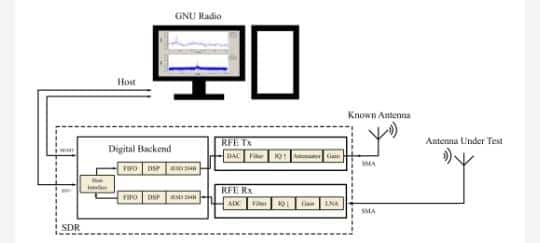
Figure 1 . Role of SDR in antenna T and M ( image credit – eetimes )
SDR in action across the T&M workflow
- R&D Labs: Prototyping new PHY layers, developing custom waveforms, emulating network elements for device testing, and channel sounding
- Conformance & pre-certification testing: Generating reference signals and analysing device responses according to evolving standards (though final certification often still requires accredited dedicated boxes)
- Manufacturing test: High-volume testing of wireless modules using optimised software test scripts running on SDR hardware
- Field service & troubleshooting: Portable SDRs can capture wide swathes of spectrum, demodulate various signals, and pinpoint interference sources or protocol errors with greater flexibility than traditional scanners
- Security research: Analysing wireless protocols for vulnerabilities, fuzzing implementations, and testing intrusion detection systems
The future is software-defined
The trajectory is clear. As wireless complexity increases and innovation accelerates, the flexibility, adaptability, and software-driven nature of SDRs make them indispensable for modern T&M. While specialised high-end signal analysers and signal generators will remain vital for ultimate performance or specific certifications, SDRs are increasingly becoming the versatile, powerful, and cost-effective workhorses of the wireless test bench. They empower engineers not only to keep pace with change but to drive it forward actively.
References:
- “Software-Defined Radio in Test & Measurement Markets” by Brendon McHugh
- Several other web pages were also consulted.
By : Vinayak Ramachandra Adkoli holds a B.E. in Industrial Production and has served as a lecturer in three different polytechnics for 10 years. He is also a freelance writer and cartoonist.