The pen finds early signs of Parkinson’s by studying handwriting. It works without batteries and can be used in regular check-ups anywhere.
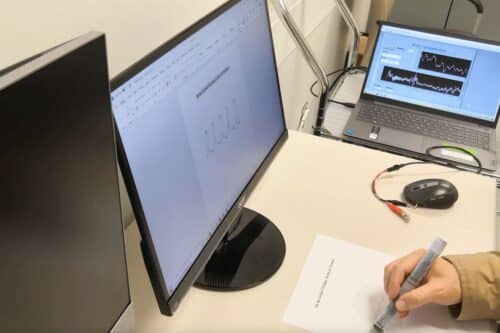
A self-powered diagnostic pen developed at UCLA can detect early signs of Parkinson’s disease with over 96% accuracy by analyzing handwriting movements. In a pilot study with 16 participants, including three with Parkinson’s, the pen captured subtle motor impairments using motion sensors and magnetic ink. These signals were processed by a neural network trained to recognize early motor symptoms, often invisible to the eye. Unlike traditional methods that rely on costly scans or specialists, the pen offers a low-cost, accessible tool that powers itself, making it suitable for routine use.
This early detection is vital. Parkinson’s is usually diagnosed only after noticeable symptoms like tremors and stiffness appear—by which time more than 50% of the brain’s dopamine-producing neurons may already be lost. Delayed diagnosis limits treatment options and reduces the potential for early interventions.
While some tests exist—like brain scans or blood-based markers—they are often costly and require access to specialists, making them inaccessible for many people. The diagnostic pen offers a simple, portable, and power-free solution that can be used even in routine check-ups by general practitioners or in low-resource settings.
The pen uses a soft silicone tip with magnetic particles in the ink. As it moves on a surface or in the air, its magnetic properties shift. These changes are captured by a coil of conductive yarn wrapped around the pen, which converts them into electrical signals. The device works without batteries, relying solely on the motion generated during writing.

Though not intended for standard writing on paper, the pen’s ability to detect fine motor control changes could lead to new ways of identifying not just Parkinson’s, but potentially other neurological disorders.
Researchers believe tools like this could help bring early diagnosis closer to where people live, enabling timely treatment and better quality of life.
Reference: Guorui Chen et al, Neural network-assisted personalized handwriting analysis for Parkinson’s disease diagnostics, Nature Chemical Engineering (2025). DOI: 10.1038/s44286-025-00219-5