




A robotic hand can twist, turn, and grip in ways that cut motion. Could this change how robots work in spaces?
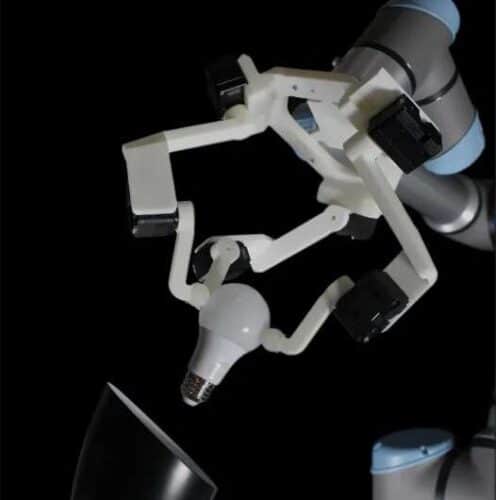
Robots are effective at single tasks such as placing a can on a conveyor belt, but in environments like homes, warehouses, or disaster zones where tasks can change, they face difficulties, even with actions like unscrewing a light bulb or turning a door handle, largely due to bulky wrist mechanisms with limited movement. To overcome this, researchers have created the Sphinx, a robotic hand with a spherical mechanism that can grasp and rotate objects along roll, pitch, and yaw axes, performing the same range of wrist movements as traditional designs but in a simpler form. Operating through mechanical design without cameras, sensors, or electronics, the Sphinx is robust, less dependent on control systems, and easier to deploy in environments.
One of the advantages of the Sphinx design is that it allows the wrist to perform rotations closer to the object being handled. In robot wrists, the mechanism is located farther from the grasped object, which forces the arm to move whenever an adjustment is needed. This makes operations slower, less efficient, and more awkward in spaces. By integrating rotation directly into the grasping mechanism, the Sphinx avoids this problem. As a result, tasks can be completed faster, with less wasted movement, and in a smaller workspace.
This capability is valuable when robots need to operate in spaces such as installing a light bulb inside a closet or manipulating an object inside a compartment. Because the Sphinx can roll, pitch, and yaw without requiring arm movements, it is suited for these situations compared to systems.
The Sphinx offers an integrated solution by combining the functionality of a wrist and a gripper in a single mechanism. It enables the kind of manipulation that robots need in environments. These are places where they may not have knowledge of object positions and must adapt to both the surroundings and the items they are handling.
The technology represents a step toward developing robots that can function in homes, disaster zones, and other environments. By simplifying wrist mechanisms while maintaining full motion capability, it advances the goal of making robots versatile, adaptable, and capable of handling tasks.


