





Bengaluru’s iOrbit is reshaping MedTech with electronics, AI, and cloud innovation—delivering compliant, connected healthcare solutions to market faster.
MedTech companies face the dual challenge of driving innovation while meeting complex global regulations. Founded in 2016 and headquartered in Bengaluru, iOrbit has emerged as a trusted partner by delivering end-to-end product development across hardware, firmware, software, industrial design, cloud platforms, and compliance.
“Our idea is to provide all the necessary components from a 360-degree perspective—from electronics and printed circuit boards to form-and-function design, user experience, apps, and our home-grown cloud platform, iTouch,” says co-founder Bipin, who leads the company with CTO Raji. This integrated approach helps startups and established players accelerate time to market while ensuring reliability.
By aligning product architecture with IEC, ISO, HIPAA, and GDPR standards from the start, the company minimises redesigns and shortens certification. “We incorporate regulatory aspects right at the design stage to minimise rework and accelerate time to market,” Bipin notes.
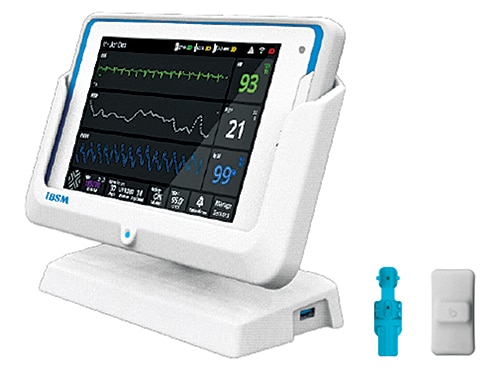
The company focuses on high-precision products such as wireless patient monitors, respiratory systems like CPAP and BiPAP machines, and fall-detection devices. Component sourcing, often a bottleneck in MedTech, is streamlined through global suppliers like DigiKey, ensuring reliability without compromising innovation.

At the heart of their strategy is iTouch, their proprietary cloud platform. Healthcare providers often struggle with interoperability, as equipment from different vendors uses incompatible data formats and communication protocols. iTouch bridges this gap, enabling multi-vendor, multi-protocol integration to create a unified digital ecosystem. The platform adheres to HIPAA and GDPR standards, includes third-party certified data protection, and has been validated through FDA-approved connected devices. Beyond secure connectivity, iTouch enables AI-driven predictive analytics, real-time monitoring, and remote diagnostics—tools that are becoming essential in modern healthcare delivery.
Unlike service firms that bill by time and resources, the company follows a milestone-based, outcome-driven model. Clients pay for deliverables, not effort. “We have never done a headcount-based business. Our payment structure is always milestone-driven to ensure our clients pay for actual outputs,” Benoy, VP, Strategy and Customer Partnership, emphasises. It has an ecosystem of 100+ engineers across Bengaluru, Pune, and Trivandrum, with offices in the US and Europe. Remarkably, 90% of the team consists of technical specialists in hardware, software, firmware, testing, and compliance. This concentration of talent enables the company to maintain tight control over quality and certification readiness, as mentioned by Sandeep Zende, Principal Staff Member, Engineering and Regulatory Affairs. Its client base spans India, the US, Europe, and Southeast Asia, covering models from device design to full lifecycle management.
Unlike many MedTech startups, the company has resisted venture capital funding, preferring organic, controlled expansion. “We are not venture-backed, and our growth strategy is focused on steady expansion aligned with client needs,” says Bipin. This independence has allowed the company to scale thoughtfully, strengthening in-house capabilities while building partnerships with regulatory consultants and OEMs.
A more significant shift, however, lies in its transition to a Software-as-a-Service (SaaS) model through the iTouch platform. The aim is to democratise access to connected healthcare by reducing costs for start-ups and smaller MedTech firms. Over the next five years, SaaS revenues are expected to become a major growth driver, fuelling sustainable expansion and diversification.
“iOrbit represents the evolution where operational technology from machines and information technology from hospital systems converge into a new intelligent orbit, combining AI and other capabilities to create smarter, safer healthcare solutions. That is why we named it iOrbit,” says Bipin.

