




Dealing with inrush currents in automotive or industrial systems? Vishay claims that their PTC thermistors can handle higher energy, reduce component count, and protect circuits.
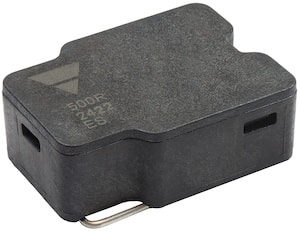
When we design high-power automotive and industrial systems, one challenge we often face is inrush current at startup. If left uncontrolled, these surges can damage converters, chargers, and motor drives. Traditional protection circuits take up board space, add cost, and can wear out over time with repeated power cycles or vibration. So, how do we manage these surges efficiently while keeping costs and complexity down?
Vishay has introduced the PTCES series of insulated, surface-mount PTC thermistors, which are designed to solve this problem. These devices can handle up to 340 J of energy and withstand voltages up to 1200 VDC. We can use them in AC/DC and DC/DC converters, DC-Link circuits, energy dump and emergency discharge circuits, on-board chargers, battery charging systems, and motor drives.
One of the key advantages is that the PTCES series can handle up to 260% more energy than many competing devices. That means we can often replace multiple components with just one, saving board space and reducing cost. The devices also support 20% higher voltage than typical alternatives, giving us more flexibility in different designs.
These thermistors are built to last. They survive more than 100,000 inrush cycles and are AEC-Q200 qualified for shock and vibration, so we don’t need reinforced mounting adhesives. Each part has a solder-connected barium titanate PTC element inside a UL 94 V-0 housing with insulation up to 3 kVAC. The 9.6 mm profile, RoHS compliance, halogen-free construction, and pick-and-place compatibility make assembly easier and more cost-effective.
By using the PTCES series, we can limit inrush current, reduce component count, save board space, and protect critical systems in automotive and industrial designs. If you’re looking for a reliable solution for inrush protection, this is one to consider.


