




Tired of dealing with 24 VAC power in your thermostat or HVAC design? Here’s a way to get DC power, battery backup, and protection.
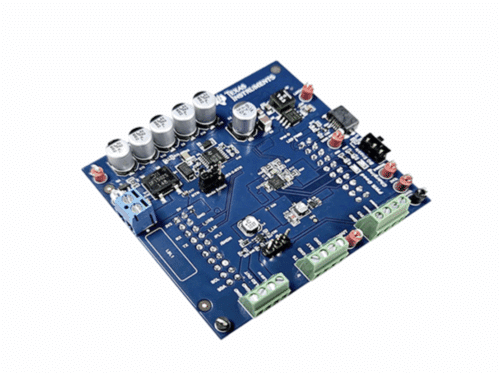
Most of us designing thermostats or HVAC controllers face a common problem of converting the standard 24 VAC line used in most building systems into DC power for the internal electronics. The TIDA010932 reference design from Texas Instruments gives us a solution. It converts 24 VAC input into 5 V and 3.3 V outputs and can also support additional converters if needed. The design includes LiPo battery charging and automatic switchover to battery power during voltage drops. It also provides LED driving and current sensing functions. This setup can be used in thermostats, video doorbells, HVAC gateways, HVAC controllers, and heat pumps.
A home HVAC system runs on a 24 VAC power supply for its controls, and many home automation devices use the same source. To operate their electronics, the AC voltage must be rectified and converted into DC levels. Usually, thermostat designs have enough space on the board, so cost becomes the main target instead of compactness. But when a battery backup is part of the design, efficiency becomes important because higher efficiency allows a smaller, cheaper battery. The design addresses both goals and can be adjusted for specific needs.
The 24 VAC input is rectified and converted into a 5 V DC rail using a wide input 2 A buck converter. The wide input range helps absorb voltage transients, removing the need for extra protection like TVS diodes. It also allows smaller input capacitors since a higher ripple can be tolerated.
For battery management, the design uses a dedicated IC that provides separate current paths for system power and battery charging. This improves battery life and reliability. It also ensures smooth switchover to battery power when the main supply fails and supports load sharing when demand exceeds the main supply capacity. A buck converter then steps down the battery voltage to 3.3 V for the main system.
Both DC DC converters in the design have low load power saving modes, so efficiency stays high even when the system draws minimal power. The design provides the key power stages required for building automation systems powered by the standard 24 VAC supply used in most homes. It is built with a modular approach, making it easy to adjust or expand based on product requirements.
A full bridge rectifier is used for DC rectification. To prevent a large inrush current during the initial connection of the 24 VAC supply, a soft start circuit is included. The design also uses an eFuse to protect ICs from overvoltage or overcurrent events. It offers adjustable protection for load, source, and device safety, including control over current limit, output slew rate, and voltage thresholds for both overvoltage and undervoltage conditions. The eFuse’s internal protection blocks and high voltage capability simplify system protection design.
The design focuses on efficiency during battery backup operation while reducing heat loss. To keep costs low, it avoids extra complexity. And because of its discrete architecture, we can remove unused features or add new functions and power rails as needed. The design gives us a flexible power solution for thermostats and other building automation devices powered by 24 VAC.
TI has tested this reference design. It comes with a bill of materials (BOM), schematics, assembly drawing, printed circuit board (PCB) layout, and more. The company’s website has additional data about the reference design. To read more about this reference design, click here.