Ice can appear on roads and airplanes, causing accidents. New sensor technology detects it early, giving drivers and pilots time to respond and avoid crashes.
Ice on roads and aircraft is a hidden danger that causes thousands of accidents every year. About 20% of weather-related car crashes happen on icy surfaces, while ice buildup contributes to roughly 10% of fatal air carrier crashes. In extreme cases, ice can block critical sensors on airplanes or cover the plane itself, leading to deadly accidents.
These hazards are not limited to specific seasons or regions. Black ice can form suddenly on roads, and airplanes of all sizes can encounter supercooled water droplets at high altitudes, freezing instantly on contact. For drivers, a few seconds of delayed reaction can cause collisions. For pilots, undetected ice can compromise aerodynamics and control, creating life-threatening situations.
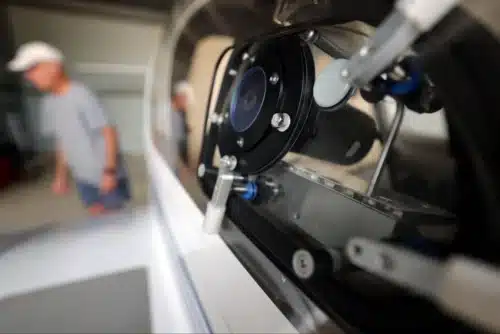
To address this, researchers at the University of Michigan developed a pair of complementary sensors that detect ice in real time. One sensor uses microwaves embedded flush with an aircraft’s surface to measure ice buildup directly on the plane. The other employs three infrared lasers to detect freezing rain and water droplets in clouds, identifying potential icing hazards before the aircraft enters them. Together, the sensors give pilots early warnings and help automated systems respond to icy conditions.
Testing on a single-engine airplane and a light business jet showed how the system works in practice. The microwave sensor changes its signal when water or ice forms on the aircraft, while the laser system identifies whether clouds contain ice, supercooled droplets, or both. A third laser estimates droplet size and concentration, providing additional risk assessment.

The technology is not limited to aviation. On the ground, the laser sensor could detect black ice on roads, giving drivers and automated vehicles time to slow down or take safety measures. Even modest reductions in speed—just a few miles per hour—can cut the risk of serious injury in half.
By detecting ice before it becomes a threat, this technology could make air and road travel safer for pilots, drivers, and automated systems around the world.