






Quantum and biomedical technologies aim to protect data, process complex algorithms, and create affordable gene-based cancer therapies using local research platforms.
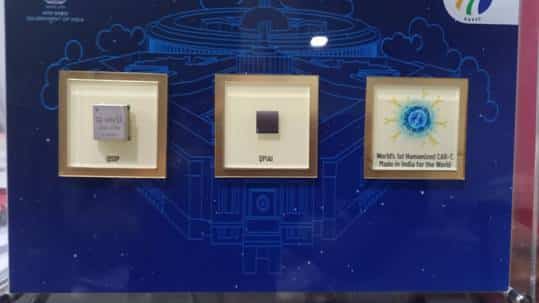
Modern computing and medical systems face three growing challenges from digital security attacks in the quantum era, including the need for more computing power for complex calculations, which delays progress in cancer treatments.
To address these gaps, India unveils three new technologies at the Emerging Science, Technology and Innovation Conclave (ESTIC) 2025, which include the Quantum Secure Information Processor (QSIP), a 25-qubit Quantum Processing Unit (QPU), and NexCAR19, the country’s first indigenous CAR-T cell therapy, which aim to address these scientific gaps through indigenous innovation.
These technologies Current encryption systems risk becoming obsolete as quantum computers advance, capable of breaking today’s cryptographic codes. The QSIP chip solves this by using quantum key distribution (QKD), where data encryption keys are transmitted through photons that collapse if intercepted, making eavesdropping detectable.
The chip enables quantum-safe communication networks designed for secure data transfer across government, financial, and research systems.
Traditional processors also struggle with problems that require simultaneous, multi-variable computation. The 25-qubit QPU introduces a superconducting qubit architecture that is capable of representing multiple states simultaneously, allowing it to process large datasets faster than classical machines.
The chip is designed for algorithm testing, material simulation, and cryptographic research, laying the groundwork for domestically developed scalable quantum computing systems.
In medicine, CAR-T therapy remains unaffordable in most countries due to dependence on imported treatments. India’s NexCAR19, developed by ImmunoACT, an IIT Bombay spin-off, reprogrammes a patient’s immune cells using lentiviral vectors to identify and attack cancer cells.
Unlike global versions based on animal-derived receptors, NexCAR19 uses humanised CAR designs to reduce immune rejection and treatment toxicity.
The therapy, supported by the Department of Biotechnology (DBT) and BIRAC, is undergoing clinical trials at Tata Memorial Centre. A new 200-litre GMP manufacturing facility under the BioE3 policy will support vector production for up to 1,000 patients annually.

