With the rising complexity of embedded systems and the difficulty in finding hidden bugs, observability tools seem to be the new alternative for developers. It shows what is happening in real time. What do the innovators say?
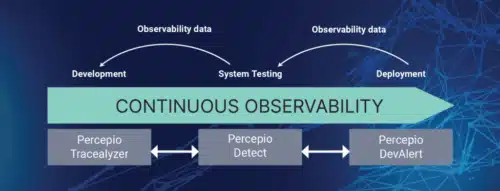
Modern embedded systems are increasingly complex. Many devices now run real-time operating systems (RTOS) such as FreeRTOS, Zephyr, or ThreadX, often with multiple threads and concurrent tasks. Traditional debugging methods, such as print statements or single-threaded stepping, are no longer sufficient. They cannot provide a complete view of runtime behaviour, leaving timing issues, scheduling conflicts, and intermittent bugs difficult to detect. Embedded engineers need advanced software-based tracing tools that can capture events in real time without stopping or significantly slowing the system.
In a discussion with Andreas Lifvendahl, CEO, and Johan Kraft, CTO of Percepio, they highlighted the main advantages of observability and traceability tools. “By providing continuous insight into system dynamics, these tools help engineers diagnose problems immediately, reducing debugging time by as much as 90% in some cases and even doubling overall development speed. They are especially valuable in multithreaded or high-performance embedded systems, where subtle timing issues can have significant consequences,” Johan explained.
A major challenge in embedded development is detecting bugs that only appear under rare runtime conditions. These hidden issues can slip past testing and appear in production, causing failures or customer complaints. “Observability tools, like software-based trace analysers, allow engineers to monitor CPU usage, latency, and other runtime metrics systematically. This early detection reduces the risk of field failures and speeds up debugging, as engineers can analyse real events rather than attempting to reproduce them manually,” noted Johan.
Percepio also has a significant presence in India, which has become one of its fastest-growing markets. The company works with a variety of customers across different sectors, supported by an active distributor, FTD Infocom. Its client base in India spans large telecom companies as well as medical and life sciences organisations. “We observe a wide spectrum of embedded engineering teams in India, but generally note that, compared to Europe, Indian engineers are actively exploring new tools and approaches. This curiosity is evident in the number of early adopters in India expressing interest in Percepio’s Detect solution,” Andreas added.

Percepio is actively looking to expand its partnerships in India, particularly with OEMs, system integrators, and silicon vendors. The company has already initiated discussions with several potential partners, and while progress is gradual, large system integrator houses are seen as ideal collaborators. India hosts a number of prominent companies serving global markets, and the company views these organisations as well-suited for integrating its TraceLyzer and Detect tools. These partners can engage with customers early, assume full development responsibilities, and introduce best practices and methodologies, going beyond writing code to help customers set up the systems they need.
“In addition to corporate partnerships, we are also very interested in engaging with the academic and startup ecosystems in India. We are still a relatively small company and have not been able to travel extensively so far. Still, we are planning to organise a small roadshow in 2026 in collaboration with our distributor. Our goal is to connect with both customers and partners and explore opportunities within India’s vibrant startup landscape. We see great potential in these interactions and are eager to support innovation and development within India’s dynamic embedded systems community,” said Andeas.
Observability tools bridge gaps in experience. Junior engineers often have limited exposure to low-level hardware interactions and RTOS complexities. By providing a clear view of runtime behaviour, these tools help both experienced and new engineers optimise performance, improve reliability, and reduce development risk.
The full interview will be live soon!