Healthcare decision makers can see how helium free MRI design lowers operating costs and eases deployment in regional facilities.
India relies heavily on imported magnetic resonance imaging systems, making advanced diagnostic imaging expensive and less accessible, particularly for smaller hospitals and regional healthcare centres. The limited domestic manufacturing of high end medical imaging equipment has also contributed to higher operating costs and infrastructure gaps across the country.
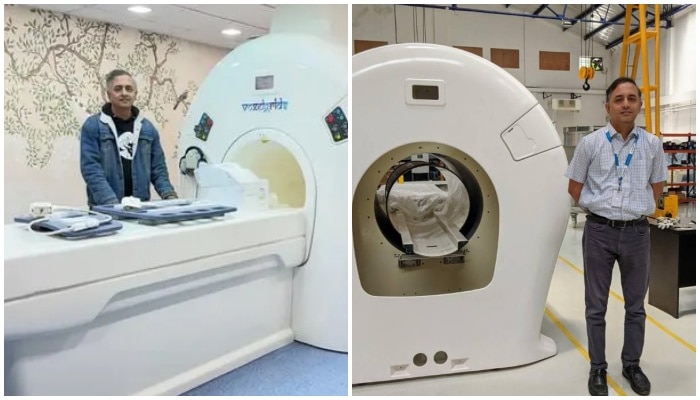
Addressing this need, Bengaluru based startup VoxelGrids has developed India’s first fully indigenous MRI scanner. The 1.5 tesla system has been deployed at the Chandrapur Cancer Care Foundation near Nagpur, marking a step toward local manufacturing of advanced diagnostic technology.
The scanner is built focusing on designing and building the system entirely within India. The device does not rely on liquid helium, which is commonly used in conventional MRI systems and contributes significantly to cost and operational complexity. By eliminating helium usage, the system reduces manufacturing costs by nearly 40 percent while maintaining standard bore size and clinical imaging capability.
The company has also developed compact and energy efficient electronics around the magnet, lowering power consumption and ongoing operating expenses. These design choices aim to improve deployment feasibility in hospitals with limited infrastructure.
Key features include:
• 1.5 tesla indigenous MRI scanner developed and deployed in Maharashtra
• Liquid helium free design reduces cost and operational dependency
• Lower power consumption with standard bore size
• Pay per use pricing model planned to reduce upfront capital burden
• Manufacturing capacity of 20 to 25 units annually in Bengaluru
Looking ahead, VoxelGrids is exploring mobile MRI units and export opportunities after meeting domestic demand.