




For users dealing with frequencies up to 40 GHz, these solutions offer adaptable mounting and routing flexibility while supporting testing, production, and precise signal transfer needs.
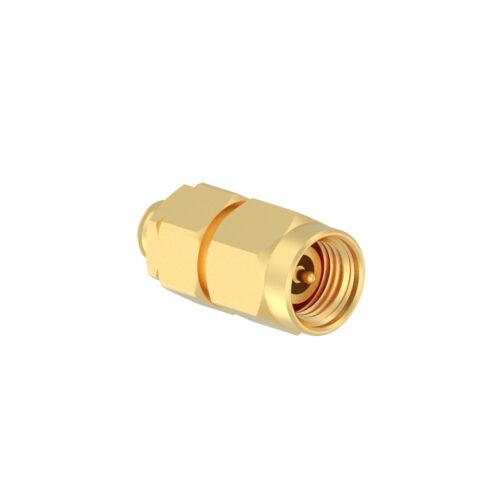
Amphenol RF has introduced 2.92 mm connectors engineered to accommodate 0.141” conformable cable, designed to support low-loss signal transmission at frequencies up to 40 GHz. The connectors are intended for high-frequency test and instrumentation environments, including 5G, aerospace, and broadband communications, offering flexibility for both laboratory and production system setups.
The connectors provide broadband electrical performance up to 40 GHz, supporting millimeter-wave signal integrity for measurement and validation tasks. A low voltage standing wave ratio (VSWR) helps minimize reflections and supports repeatable measurements, providing stability in precision test applications. Panel-mount and cable-mount configurations allow for adaptable system designs, while the flexibility of the 0.141” cable accommodates complex routing requirements in tightly packed instrumentation setups.
At the component level, the connectors feature gold-plated stainless steel bodies coupled with beryllium copper contacts. These materials are selected for corrosion resistance and mechanical durability, enabling long-term reliability under repeated connection cycles. The insulator is naturally finished Ultem 1000, complemented by an insulator disc made from PTFE, which together allow the connectors to maintain performance across a wide temperature range. The connectors are available in both straight plug and bulkhead jack versions, providing options for integration into different measurement or production configurations.
The 2.92 mm connectors expand Amphenol RF’s existing portfolio of RF interconnect solutions, joining a broad range of coaxial connectors, adapters, and cable assemblies. The company designs these products to support increasing demands for high-frequency, high-speed data transmission in modern electronics and communications applications. By supporting stable, high-precision signal transfer, the connectors are suited for both validation testing and deployment in production environments where signal integrity is critical.
