


An electronics-driven system uses cameras and data fusion to map street-level traffic emissions in real time, enabling precise urban monitoring, smarter transport policies, and scalable, low-cost environmental sensing infrastructure.
Researchers at Massachusetts Institute of Technology have developed a system that measures vehicle emissions at a street-by-street level in near real time, marking a shift toward electronics-driven urban sensing and data fusion for smart city planning.
The system integrates existing infrastructure—traffic cameras, mobile phone data, and emission models—to generate high-resolution pollution maps across cities. Unlike conventional estimation methods that rely on sparse sampling, the approach delivers dynamic, hourly insights down to individual roads, enabling more precise monitoring of transport emissions.
At its core, the technology leverages computer vision and distributed sensing—key enablers of electronics—to classify vehicles and analyse traffic flow without capturing personally identifiable data. By combining inputs from over 300 urban cameras and anonymised mobility datasets, the model achieves high accuracy in categorising vehicle types and estimating emissions patterns across dense urban grids.
This granular visibility exposes how micro-level traffic behaviours—such as stop-and-go motion at signalised intersections—significantly influence emissions, a factor often overlooked in traditional citywide models. The platform effectively bridges the gap between coarse aggregate inventories and highly localised but limited vehicle-level measurements.
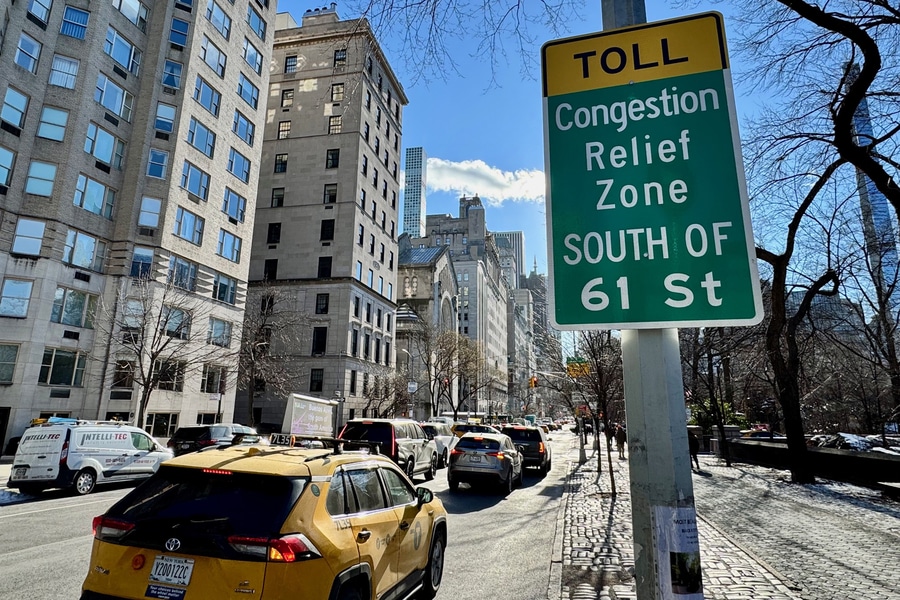
The system also functions as a simulation engine for policy evaluation. In modelled scenarios, shifting commuters from private vehicles to buses or redistributing peak-hour traffic showed measurable emission reductions. Real-world validation came from analysing New York City’s congestion pricing rollout, where a ~10% drop in traffic translated into a 16–22% reduction in emissions, demonstrating the system’s capability to quantify policy impact in near real time.
From an electronics and embedded systems perspective, the work highlights how edge sensing, computer vision, and multi-source data integration are converging to enable scalable environmental monitoring. By repurposing already-deployed sensors, the approach minimises additional hardware costs while maximizing data utility.
As cities push toward decarbonization, such real-time, electronics-enabled emission tracking systems could become foundational infrastructure—supporting adaptive traffic control, smarter urban design, and data-driven climate policies.