





What if screening could be both precise and non-intrusive? These systems combine mmWave imaging and AI to minimise pat-downs while maintaining detection accuracy.
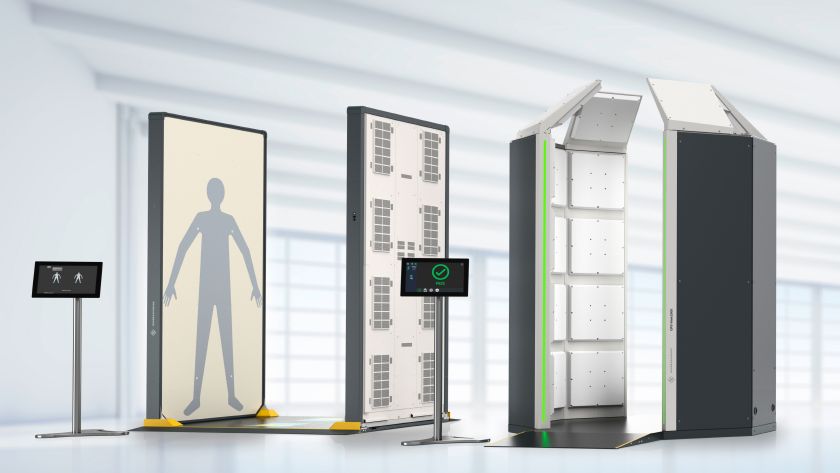
Rohde & Schwarz has introduced its QPS201 body scanner and QPS Walk2000 walk-through scanner in India, demonstrating a dual-layered approach to security screening that balances high throughput with deep detection capability. Through live demonstrations, the systems showcased how advanced imaging and AI can be deployed across varied environments without compromising user experience or operational efficiency.
Designed for high-footfall environments, the QPS Walk2000 enables seamless, walk-through screening with 360-degree body coverage, allowing individuals to pass through without stopping or removing everyday items such as belts or jackets. This makes it particularly suitable for locations such as large public venues, commercial buildings, and event spaces where maintaining flow is critical. By combining continuous movement with AI-based detection of both metallic and non-metallic objects, the system reduces bottlenecks while still identifying potential threats, ensuring that security does not come at the cost of convenience.
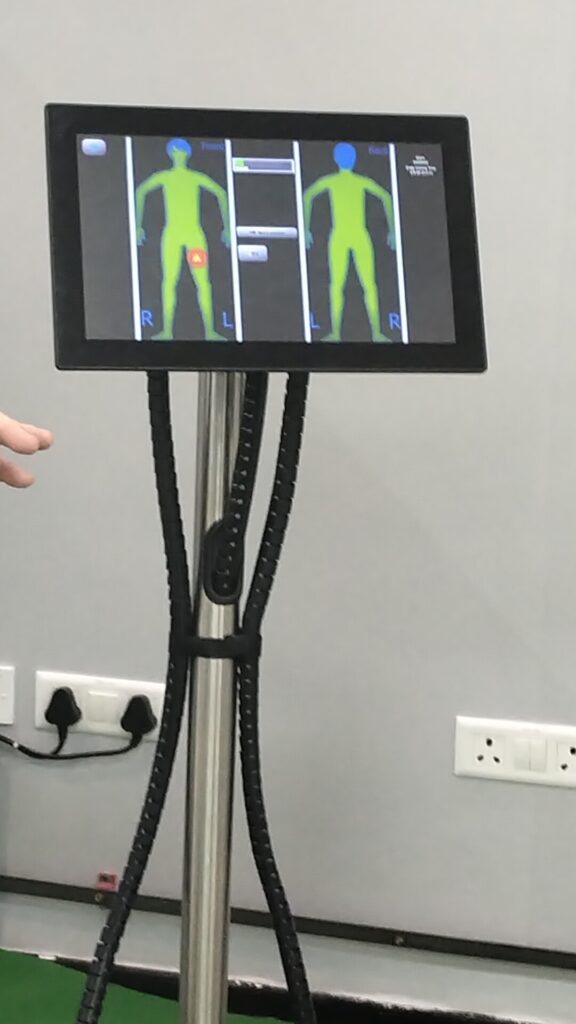
In contrast, the QPS201 body scanner is engineered for high-security applications, including aviation and defence, where deeper inspection is required. The system enables detailed screening to detect concealed threats such as explosives or prohibited materials beneath clothing. Using millimetre-wave technology, it captures reflections from the body surface, ensuring accurate detection without penetrating the skin. This makes it suitable for environments where precision and threat sensitivity take precedence over throughput, and where regulatory compliance plays a critical role in deployment.
Together, the two systems form a layered and scalable screening architecture, allowing operators to adapt security intensity based on risk levels. High-throughput preliminary screening can be conducted using the walk-through system, while the body scanner can be deployed selectively for secondary checks, improving both efficiency and overall detection reliability.
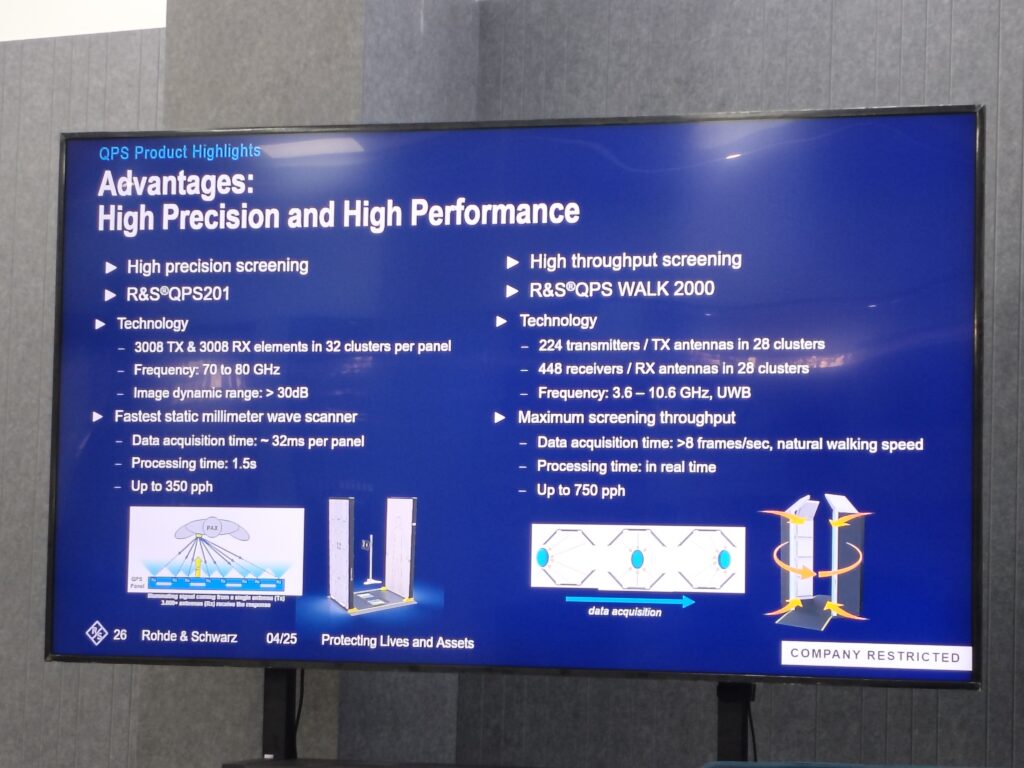
At a technology level, both systems leverage millimetre-wave (mmWave) imaging using non-ionising radiation, ensuring safe, repeated use even for individuals with medical implants. AI-driven algorithms further enhance detection by accurately identifying both metallic and non-metallic objects while maintaining a controlled alarm rate, preventing minor items from triggering unnecessary alerts and disrupting flow.
On an interaction with an EFY,
Herald Jentsch, Director of Sales Aviation at Rohde & Schwarz, said, “It is a highly regulated market. Having the idea of a product and building it takes around three to four years, but certification adds significantly more time. European approvals take about a year, and the TSA certification process in the US can add another three to four years before you are ready for global aviation deployment.”
Peter Walhoefer, Director of Sales Security Systems at Rohde & Schwarz, added, “The key is to detect the important threats without exceeding a certain alarm rate. If you generate too many alarms, every individual has to be rechecked, which slows down the entire process and negatively impacts the overall experience. So, it is always about balancing detection performance with throughput in real-world deployments.”
