What if a material’s shape could change how it stores energy? Star-like nanostructures enable faster, surface-driven storage with hybrid battery–capacitor behaviour.
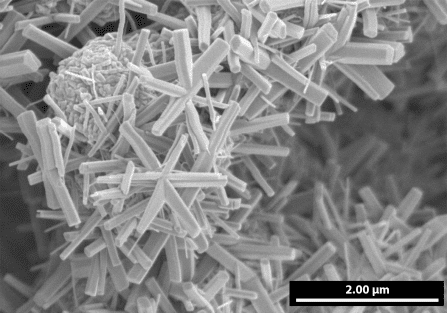
Researchers at University at Buffalo have demonstrated how altering the shape of a nanomaterial can significantly change how it stores energy, highlighting a new pathway for designing advanced energy storage systems. The study focuses on vanadyl hydroxide (VOOH), showing that its morphology, rather than just its composition, can determine whether it behaves like a battery or a pseudo capacitor, with implications for faster and more efficient energy devices.

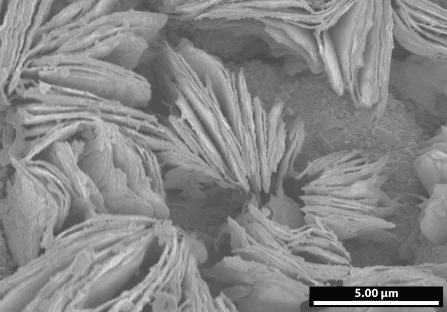
The findings underline the growing importance of structural design in materials science. While traditional batteries store energy internally, pseudocapacitors store energy at or near the surface, enabling quicker charge and discharge cycles. By transitioning VOOH from flat sheets to rod like clusters and finally into star shaped structures, the researchers observed a clear shift toward surface based energy storage. This hybrid behavior could support the development of systems that combine the long term storage of batteries with the rapid response of capacitors, particularly relevant for emerging fields such as AI driven computing and neuromorphic systems.
At the core of the research is controlled material growth at the nanoscale. The team tracked the evolution of VOOH over several days using advanced electron microscopy techniques. Initially forming as flat sheets after 36 hours, the material behaved like a conventional battery. As it developed into rods and eventually six armed star structures by 84 hours, its increased surface area and higher density of defects altered its electrochemical properties. These structural changes enabled more efficient surface interactions, directly influencing how energy is stored and released.
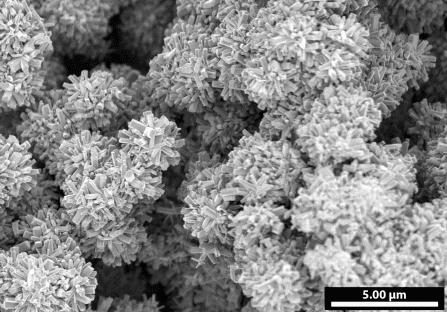
Luis De Jesús Báez, assistant professor of chemistry, says “By simply changing a material’s morphology, you can change its electrochemical behavior and thereby change what you can do with it.”
The study reinforces how nanoscale engineering and precise control over material growth could play a critical role in shaping next generation energy technologies.