




A laser phenomenon from MIT transforms chaotic light into a focused beam, enabling faster, high-resolution brain-interface imaging and accelerating electronics-driven biomedical research for targeted therapies.
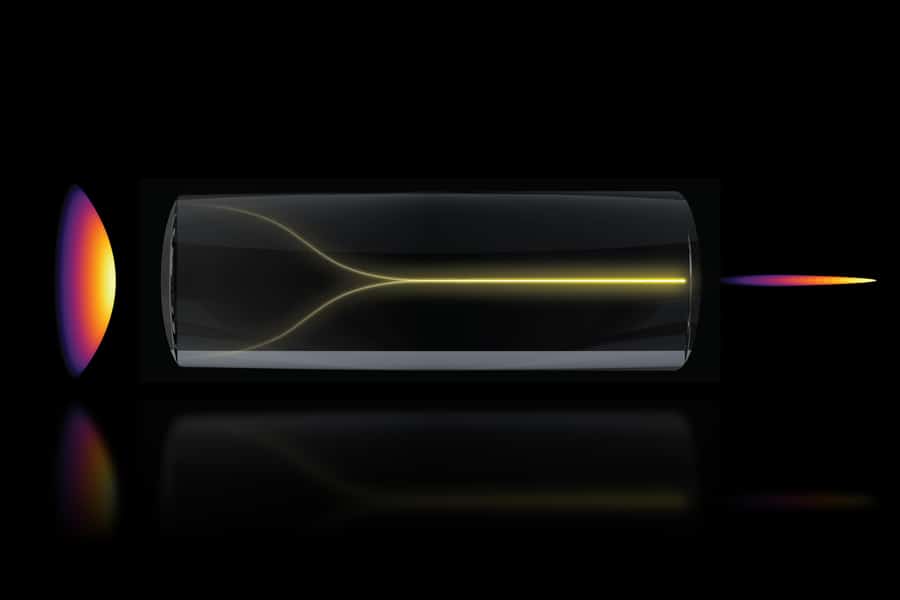
A new advancement in laser physics is reshaping bioelectronics imaging by turning disorder into precision. Researchers at MIT have demonstrated a self-organising “pencil beam” laser that dramatically improves the speed and quality of biological imaging, with implications for brain-targeted therapies and electronic imaging systems.
The innovation stems from an unexpected optical behaviour. When high power is delivered through a multimode optical fibre under tightly controlled conditions, rather than scattering chaotically, the light reorganises into a narrow, stable beam. This challenges long-held assumptions in photonics that higher power inevitably leads to disorder.
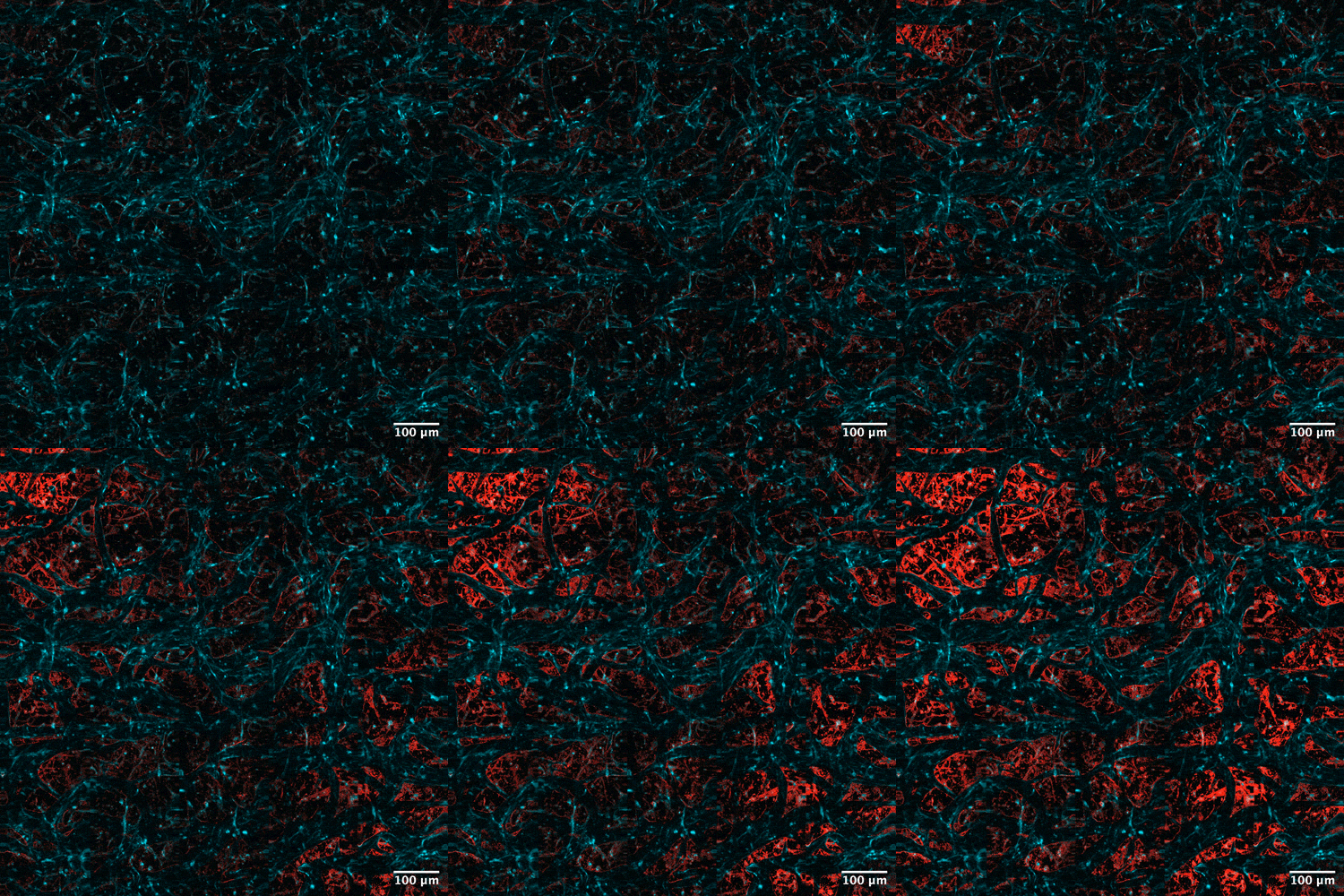
This self-organised beam acts like a highly efficient optical probe. In testing, it enabled three-dimensional imaging of the blood-brain barrier at speeds up to 25 times faster than conventional methods, while maintaining comparable resolution. The technique also eliminates common optical artefacts, such as sidelobes—blurred halos that degrade imaging clarity—thereby resulting in cleaner signal capture for electronic imaging systems.
From an electronics perspective, the breakthrough simplifies system design. Traditional high-resolution laser imaging often requires complex beam-shaping hardware. Here, precise alignment and controlled power levels alone trigger the self-organisation effect, reducing the need for additional optical components and enabling easier integration into existing photonic and sensing platforms.
The most immediate impact lies in biomedical electronics. The system allows real-time tracking of how drugs move across the blood-brain barrier and interact with individual cells—without requiring fluorescent markers. This capability could accelerate the development of treatments for neurological conditions such as Alzheimer’s and ALS by providing faster feedback on the efficiency of drug delivery.
Beyond healthcare, the discovery opens new avenues in nonlinear optics and photonic system design. By leveraging self-organisation rather than suppressing it, engineers may develop simpler, high-performance laser systems for imaging, sensing, and potentially neural interface technologies.
The work signals a shift in how electronic-photonic systems handle complexity—turning optical chaos into a functional advantage for next-generation imaging and therapeutic design.


