




What if superconductors could operate more reliably at higher temperatures and under strong magnetic fields through nanoscale material engineering?
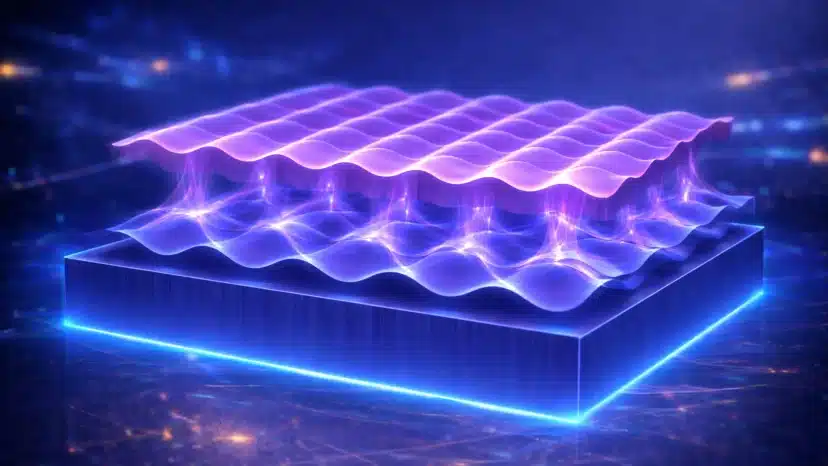
Researchers at Chalmers University of Technology have demonstrated a material engineering approach that enhances superconducting performance by reshaping the underlying substrate at the nanoscale. The method improves how ultrathin superconducting films behave, enabling stronger and more stable superconductivity under conditions that normally weaken or disrupt it.
The work focuses on cuprate based superconducting films only a few nanometres thick, deposited on a magnesium oxide substrate. Instead of altering the chemical composition of the superconductor itself, the researchers engineered the surface of the supporting substrate to create controlled nanoscale ridges and valleys. This structure guides atomic arrangement in the superconducting layer, influencing how electrons organize and move at the interface.
This interfacial control results in an electronic landscape that strengthens superconducting behavior, allowing it to persist at higher temperatures than typically achievable. Importantly, the modified structure also helps the material maintain superconductivity even when exposed to strong magnetic fields, a long standing limitation for practical superconducting systems.
The approach is significant because conventional strategies for improving superconductors have largely relied on chemical tuning of materials, which often reaches physical limits in performance. By shifting focus to substrate engineering, the method introduces a new design principle where structural control at the nanoscale becomes a key lever for electronic behavior.
Floriana Lombardi, Professor of Quantum Device Physics at Chalmers University of Technology and lead author of the research, says, “By sculpting the surface that the superconductor rests on, we were able to induce superconductivity at significantly higher temperatures than previously possible. We also found that the material remained superconducting even when exposed to strong magnetic fields.”

