




What if data could be felt instead of viewed? A wearable system uses heat, touch and physical shapes to turn information into experience.
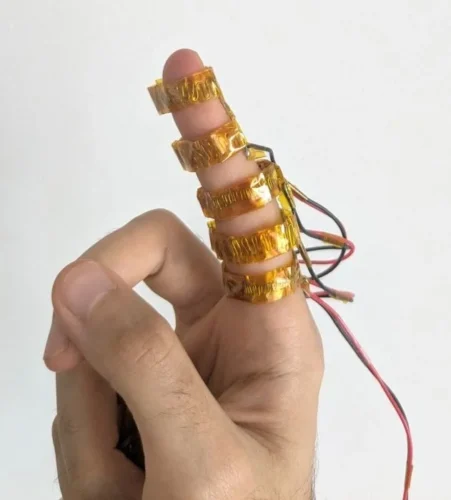
Researchers at Adelaide University have developed ThermoPhy, a wearable glove that allows users to experience data through temperature and touch rather than relying only on visual displays.
The prototype combines wearable technology with data visualization by using small heating elements and physical 3D-printed structures to represent information. ThermoPhy features two forms of data presentation. On the outside of the glove, users can attach 3D-printed tokens that create physical versions of charts such as bar graphs, line graphs and heatmaps. Inside the glove, heating elements wrapped around the fingers generate controlled temperature changes that communicate additional information through touch.
According to the research team, the combination allows data to be shared publicly through visible physical structures while also conveying personal information through thermal feedback that only the wearer can feel.
The researchers believe the technology could be useful for representing human-centered data such as mood, stress, wellbeing and personal experiences. For example, physical bars on the glove could represent hours of sleep, while temperature changes could indicate the user’s mood. In another example, heat levels could reflect how crowded or uncomfortable a workplace or classroom felt.
The team also sees potential applications in education and communication. A user could display academic results through physical structures while thermal feedback represents the stress associated with those results, helping others better understand the experience behind the data.
The research builds on the concept of data humanism, which focuses on making data easier to relate to through physical interaction and storytelling. The researchers aim to explore how sensory experiences can improve the way people interpret and connect with information.
Future research will examine how people interpret different temperature ranges, how thermal feedback affects data understanding, and how the system could work alongside technologies such as augmented reality.
The team believes wearable systems like ThermoPhy could eventually help people understand health, emotions and personal experiences by feeling data rather than only viewing it on a screen.

