




A miniature intraoral robot enables precise, automated tooth preparation for dental crowns and reduces treatment appointments.
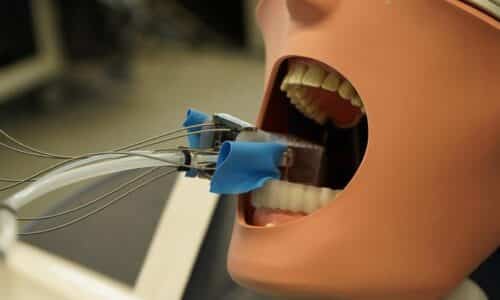
Researchers at the University of Basel have developed a Miniature Intraoral Robot (MIR) that could automate tooth preparation for dental crowns. This prototype is 43 by 26 by 28 mm in size. According to the developers, this technology would allow for the reduction in the number of appointments needed to complete the process of tooth preparation using a digital treatment plan.
This robot is attached to a custom-made dental splint that is made based on a digital scan of the patient’s teeth. Although the motors and the controlling system of this device are placed outside the oral cavity, the motions are transmitted via flexible drive shafts and cables and tubes. Based on the scan of the tooth, dentists can develop a digital plan of the removal of materials and place an order for the crown immediately, potentially eliminating the need for a second preparation appointment. The splint also ensures the robot maintains its position even if the patient turns the head.
This testing included the use of synthetic resin tooth models and ceramic material with hardness comparable to tooth enamel. Tooth preparation consists of two steps: the first one is the use of a wide drill removing material from the upper side of the tooth, and then the long and thin drill is used for shaping the sides of the tooth.
Though the robot works without position sensors, the test resulted in less than 0.2 mm positional error in the prototype. The pressure of drilling was not higher than five newtons which is approximately the gravitational force of a half-litre bottle of water. The research team is currently measuring the operational noise of the robot.
Further research will be related to the addition of the sensors and camera to check the position and performance of the robot. The development was funded by the Center for Dentistry at the University of Zurich, Basel-based Camlog Biotechnologies GmbH and the University of Bern.
“Even after a power outage, MIR would know where it is and where it needs to continue based on the sensor data,” explains research group leader Professor Georg Rauter.


