


Researchers have developed a transistor-based approach that significantly improves thermal imaging sensitivity, paving the way for lower-cost cameras without requiring extreme cooling systems.
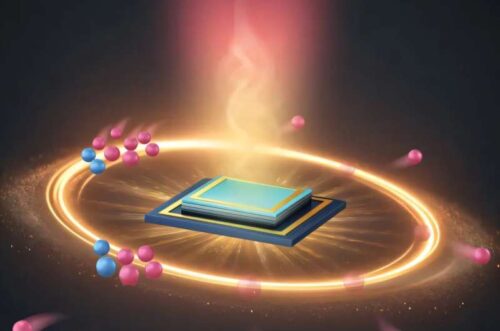
Researchers at Yale University have developed a transistor-based technique that could make thermal cameras far more accurate while reducing their cost and eliminating the need for extreme cooling. The study, published in Nature Sensors, demonstrates how a specially configured NPN transistor dramatically enhances the temperature sensitivity of conventional thermal imaging materials.

The advance addresses a long-standing limitation in thermal imaging technology. High-performance photon detectors offer excellent accuracy but require cryogenic cooling, making them expensive and suitable mainly for specialist applications. More affordable microbolometer-based systems operate at room temperature but are significantly less sensitive.
Instead of replacing existing materials, the research team incorporated a two-terminal NPN transistor that creates a carrier feedback loop. According to the researchers, this programmable feedback amplifies the material’s temperature dependence, increasing its temperature coefficient of resistance (TCR) from around 10% to as much as 150% per kelvin. This enables thermal sensors to detect much smaller changes in emitted heat.
The improved approach could benefit a wide range of applications, including autonomous vehicles, drones, robotics, night-vision systems, remote temperature monitoring, firefighting and search-and-rescue operations, where accurate thermal imaging is essential.

The researchers also noted that the technology is compatible with silicon, a material already widely used in semiconductor manufacturing. Their next step is to build complete thermal imaging devices incorporating additional components capable of detecting mid-infrared radiation and to integrate the technology onto standard silicon platforms.
If successfully commercialised, the technique could narrow the performance gap between low-cost thermal cameras and premium cooled systems, making high-quality thermal imaging more accessible across industrial, scientific and consumer applications while reducing system complexity and overall cost.