It offers design engineers a ready-to-use, open hardware foundation for developing embedded graphical user interface (GUI) products, enables faster prototyping, reduced design risk, and a smooth transition from concept to production-ready embedded HMI systems.
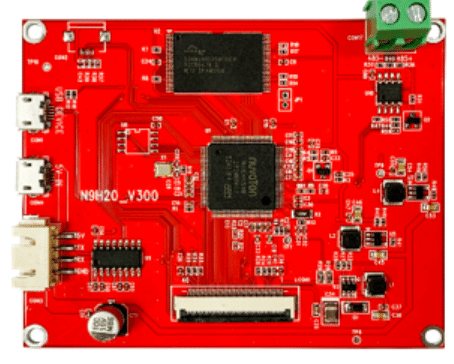
Nuvoton’s GUI Reference Design portfolio provides a set of fast, practical hardware foundation designs specifically tailored for graphical user interface (GUI) embedded products, enabling design engineers to avoid the complexities and time costs of developing display subsystem hardware from scratch. The primary challenge in GUI-centric designs selecting and integrating a suitable TFT-LCD display with the controller is addressed by Nuvoton’s pre-validated reference modules, which come with complete design data and ensure that critical display, touch, and peripheral interfaces work together seamlessly.
These reference designs are open-source, and include full schematic diagrams, PCB Gerber files, PCB job files, and a bill of materials (BOM). This means engineers can directly use or adapt the hardware designs in their own products, drastically reducing development cycle time and risk while maintaining control over system integration. The designs also incorporate important real-world engineering considerations such as ESD (electrostatic discharge) and EMI (electromagnetic interference) protection, which are essential for product reliability and compliance in commercial environments.
Among the available reference designs are boards like NuMaker-emwin-RDK-N9H30, NuMaker-emwin-RDK-N9H20, and NuMaker-Thermostat-N9H20, which are centered on the N9H series of ARM9-based MPUs and paired with the SEGGER emWin embedded GUI library. These modules support high-quality user interfaces with features such as resistive touch support and color LCD outputs, targeting common embedded HMI applications like thermostats, industrial control panels, and other interactive displays. Engineers can source these reference boards directly if they meet project requirements allowing immediate prototype validation without hardware iteration.
From a hardware perspective, typical reference modules based on Nuvoton’s N9H processors provide an integrated LCD controller, DDR memory, NAND or SPI flash for application and asset storage, and a range of standard interfaces including UART, USB (host/device), RS-485, CAN, and Ethernet to facilitate communication with sensors, actuators, or network systems. For example, full featured designs like a 7” HMI reference incorporate a 24-bit color display, ARM926 core around 300 MHz, network interfaces, and robust power support, demonstrating how the reference hardware can serve as a base platform for complete GUI products.
By leveraging these reference designs, engineers can accelerate both hardware and software integration, validate performance early, and carry forward a production-ready electrical foundation that aligns with industry design standards while focusing development effort on application-specific features rather than low-level hardware and display integration challenges.
Nuvoton has fully tested this reference design and provides comprehensive hardware documentation, including schematics, PCB layout files, assembly drawings, and a complete bill of materials (BOM). Additional technical details and supporting resources are available on Nuvoton’s website. With validated display integration, the reference design streamlines TFT-LCD and touch interface development while incorporating essential EMI and ESD protection considerations for reliable embedded GUI applications.For more information, click here.