




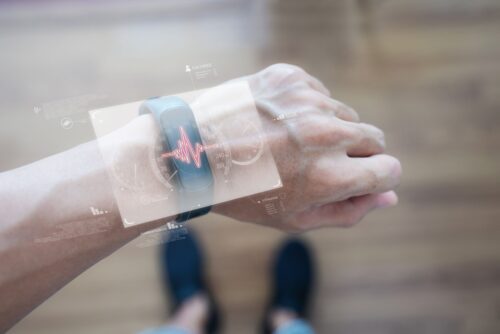
A medical wearable solution delivering private, low latency sensing by processing radar and muscle signals directly on the device.
As digital health and wearable devices evolve, manufacturers face growing pressure to deliver smarter sensing without adding complexity, latency, or power overhead. Detecting health risks such as aspiration in elderly users or enabling intuitive, touch free interaction remains challenging, especially when cloud based AI raises privacy and reliability concerns.
Addressing this gap, Asahi Kasei Microdevices and Silicon Valley based Aizip have partnered to showcase two AI enhanced sensing solutions that bring real time intelligence directly to the device.
The first solution focuses on real time swallowing detection using millimeter wave radar. The system monitors subtle throat movements without requiring a wearable device, helping identify aspiration risk, a major cause of pneumonia related deaths among older adults. Motion data captured by the radar is translated into time based signal patterns and analyzed locally using the company’s lightweight AI models, enabling the system to reliably distinguish swallowing from throat or other body movements in real time.
The second demonstration focuses on gesture recognition using electromyography signals. The system is built around AK05611 analog front end IC and is integrated into a wristband worn on the forearm. It detects electrical signals generated by muscle movement, which are then analyzed by on-device AI models. These models translate the muscle activity into simple hand gestures, allowing users to interact with devices, send alerts, or trigger actions without touching a screen.
The key features include:
- Non wearable swallowing detection using millimeter wave radar
- Real time on device AI processing with no cloud dependency
- EMG based gesture recognition using a compact analog front end IC
- Low power operation suitable for battery powered wearables
- Improved privacy and reduced latency
“These solutions work quietly in the background and respond the moment something goes wrong,” says Gregg Rouse, President of AKM’s US business. The collaboration highlights how combining advanced sensors with local AI can unlock practical, life impacting applications across digital health and beyond.

