One sensor measures strain, strain rate, and temperature at the same time. It uses a single layer instead of multiple layers, which could change the way sensors are made.
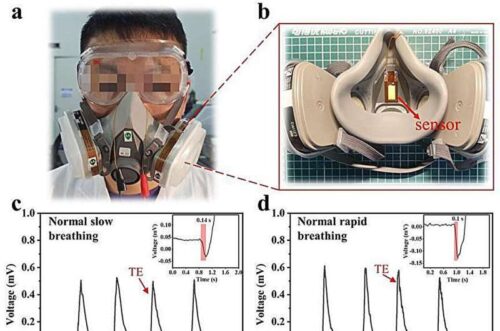
Engineers designing wearables, biomedical devices, and flexible electronics face a practical problem. Measuring strain, strain rate, and temperature usually needs multiple sensor layers made from different materials. This makes signal collection complex, often needs external power, and lowers reliability during continuous use.
Researchers at the Institute of Metal Research of the Chinese Academy of Sciences have developed a flexible sensor that addresses this problem. The sensor measures strain, strain rate, and temperature using a single active material layer, marking a clear step forward in multimodal sensing.
The study focuses on a core limitation in conventional sensor design. Most existing multimodal sensors rely on complex multilayer structures, where each layer performs a different sensing function. This structure makes signal separation difficult and increases system complexity.
To solve this, the researchers built a flexible sensor using a specially engineered network of tilted tellurium nanowires. Through careful material and structural design, they overcame a fundamental issue in conventional materials. Thermoelectric and piezoelectric signals, which normally cannot be collected in the same direction, are both detected and output in the out-of-plane direction within a single structure.
The sensor demonstrates strong performance. It achieves a strain sensitivity of 0.454 V, a strain rate sensitivity of 0.0154 V·s, and a temperature sensitivity of 225.1 μV·K⁻¹. These values are higher than those reported for earlier multimodal sensors.
Experiments confirm that the flexible, single-channel sensor can detect strain, strain rate, and temperature simultaneously. The results also highlight the importance of strain rate sensing under dynamic conditions, where the speed of deformation strongly influences material behavior.
First-principles calculations explain the sensing mechanism. Charge redistribution in tellurium atoms generates piezoelectric effects, while external fields such as thermoelectric potentials modulate the output signals. The work points to new possibilities for single-channel, multimodal sensing systems in artificial intelligence, biomedical monitoring, and flexible electronics.