




Researchers have developed experimental wireless earbuds with built-in cameras that enable real-time AI interaction, allowing users to translate text, recognise objects, and receive instant contextual feedback hands-free.
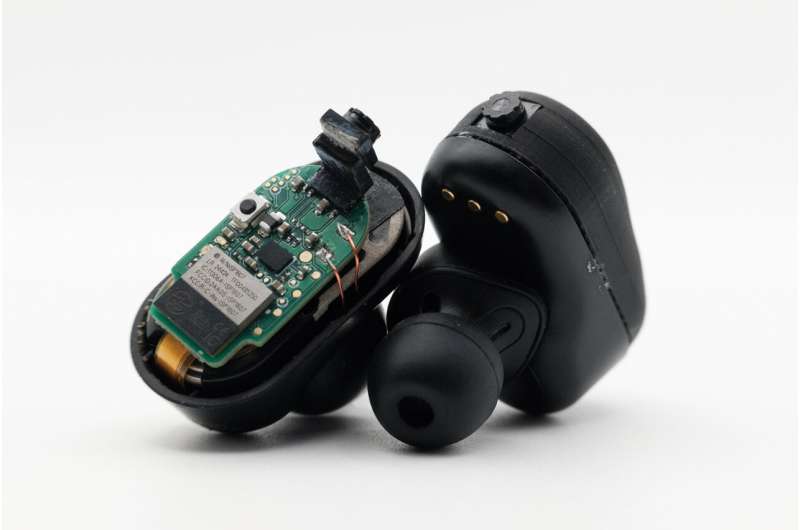
A new prototype of AI-powered wireless earbuds is pushing consumer electronics into a more immersive, screenless future, with embedded cameras enabling users to “see” through artificial intelligence in real time.
Developed by researchers at the University of Washington, the system called VueBuds integrates tiny cameras into off-the-shelf earbuds, capturing low-resolution images of the user’s surroundings and sending them to a paired device for processing. The onboard AI model then responds to voice queries about what the user is looking at, often within a second.
The concept shifts earbuds from purely audio accessories into visual-intelligence devices. In one demonstration, users can look at foreign-language packaging and ask for a translation, receiving spoken feedback instantly. The system relies on Bluetooth to transmit image data and uses lightweight, on-device AI models rather than cloud processing, reducing latency and improving privacy.
Privacy remains a central design consideration. The prototype includes a visible indicator light when recording and allows users to delete captured images immediately. Processing is handled locally on the connected device, avoiding continuous cloud uploads, a key concern as wearable AI devices become more pervasive.
The earbuds use low-power, black-and-white cameras, highlighting the engineering trade-offs required to fit visual sensing into compact consumer hardware. Despite limited image quality, researchers say the system is sufficient for tasks such as text reading, object recognition, and contextual question answering.
The development reflects a broader shift in the wearables market, where companies and startups are increasingly exploring earbuds as a primary interface for AI. Unlike smart glasses, earbuds offer a familiar form factor and lower social friction, making them a strong candidate for mainstream adoption.
While still experimental, camera-equipped earbuds signal how next-generation electronics could merge audio, vision, and AI into a single, always-available assistant, potentially redefining how users interact with everyday environments.


