




A next-generation storage infrastructure designed to help AI systems handle massive context memory and multi-turn reasoning is set to reshape how large-scale inference workloads are supported.
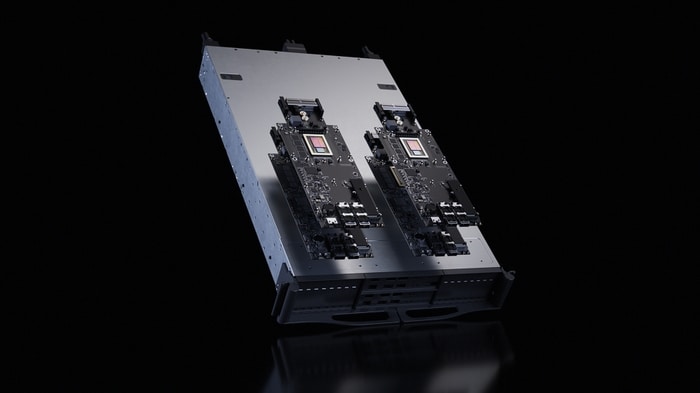
A new class of AI-oriented storage technology by NVIDIA emerged that tackles one of the thorniest challenges in modern AI workloads: managing and sharing vast amounts of context data efficiently during inference. Traditional storage and memory hierarchies built for generic compute rather than AI’s specific needs struggle to keep up as models grow into multi-agent, multi-turn reasoning systems that require persistent, large-capacity context memory.
The core of the development is a specialized data processor that underpins the newly announced AI-native storage architecture, which extends GPU memory and shares key-value (KV) inference cache across clusters with high bandwidth and predictable latency. This change is driven by AI’s transition from single prompt processing to continuous, long-context reasoning, where large shared memory is essential for responsiveness and accuracy.
The key features are:
- Extends GPU memory with cluster-scale key-value cache capacity for long-context inference.
- Up to 5× higher tokens-per-second throughput compared with traditional storage.
- Hardware-accelerated KV cache placement reduces metadata overhead and data motion.
- Efficient sharing of context across nodes via high-performance Ethernet.
- Up to 5× better power efficiency over conventional storage architectures.
Industry partners including major storage and systems vendors are already building supporting platforms, planning availability in the second half of 2026. Early benchmarks and projections highlight significant performance and efficiency gains for inference workloads that depend on rapid context access and sharing. Beyond raw performance, the new infrastructure addresses scalability and energy efficiency, two constraints that have dogged data centers as AI workloads burgeon. By decoupling storage services from host CPUs and enabling hardware-accelerated placement of key-value cache data, the architecture promises up to five-fold improvements in tokens processed per second and power efficiency compared with conventional storage systems under similar loads.

This design also brings tighter integration between high-performance networking, memory, and storage functions, leveraging advanced Ethernet fabrics to deliver low-latency, remote direct memory access across servers. The result is a foundation that better aligns with evolving inference paradigms where memory persistence and cross-node context sharing are critical. As AI infrastructure evolves, this storage tier could become a key enabler for next-generation AI services, lowering latency and energy costs while supporting more complex reasoning tasks at scale.


