

A new ultra-low-power wireless architecture turns tires into intelligent sensing nodes capable of processing and transmitting real-time performance data without batteries.

A new generation of in-tire sensing technology by BANF and Silicon Labs is transforming vehicle tyres into real-time data platforms capable of delivering high-resolution performance insights for autonomous vehicles and connected fleets.The system combines an ultra-low-power Bluetooth Low Energy SoC with an in-tire sensor module that processes data directly inside the tire. Operating at sampling rates of up to 4 kHz, the platform continuously analyzes tire behavior—including traction, vibration, and structural conditions—while transmitting only processed alerts to the vehicle.
The key features are:
- 4 kHz real-time tire data sampling and edge processing
- Ultra-low-power Bluetooth LE SoC for in-tire wireless connectivity
- Multi-sensor monitoring: acceleration, pressure, temperature, tread depth
- Battery-free operation using magnetic-resonance wireless power transfer
- Secure hardware architecture for protected vehicle data transmission
Conventional tire pressure monitoring systems typically activate only when pressure drops significantly, providing limited insight into tire performance. In contrast, the new approach captures thousands of data points per second and performs edge processing within the tire to detect early signs of safety risks such as wheel-nut loosening, tire slip, or reduced road friction.Reliable wireless communication from inside a tire has long been difficult due to steel belts and thick rubber layers that block radio signals. The low-power Bluetooth SoC used in the design addresses this challenge with robust RF performance, enabling stable connectivity even in the harsh electromagnetic environment of a rotating tire.
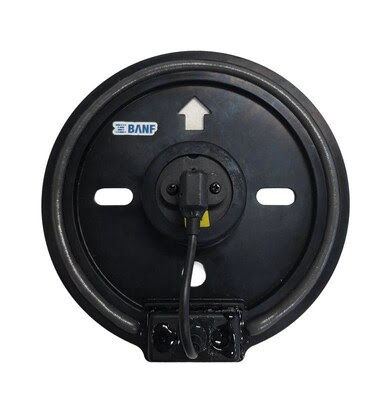
The sensing module integrates multiple measurements—including 3-axis acceleration, pressure, temperature, and tread depth—creating a high-resolution view of tire conditions during operation. By filtering and processing this data locally, the system minimizes wireless bandwidth usage while delivering rapid alerts to vehicle control systems.Power delivery has also historically limited advanced tire sensing. Batteries degrade quickly under the heat, vibration, and centrifugal forces experienced inside tires. To overcome this, the platform uses wireless energy transfer via magnetic resonance from a vehicle-mounted unit positioned near the wheel area. This design continuously powers the sensor without requiring batteries.
The architecture is designed for autonomous trucks, buses, and large fleet operations where real-time tire intelligence can feed directly into stability control, traction management, and autonomous driving systems. Secure hardware protection is also integrated to safeguard sensor data against tampering.
Beyond safety monitoring, continuous tire data could enable predictive maintenance, improved route planning, and new fleet analytics services—turning tires into active data sources within the vehicle ecosystem.