Do you know your brain can turn electricity into experiences? Dive in to know how this tech can tap into that power.
Many medical challenges like restoring lost senses, giving prosthetic limbs, easing chronic pain without drugs, and helping patients recover after strokes require a safe way to communicate with the brain. Today’s tools are either highly invasive or too limited. Scientists needed a gentler, more precise method to send signals the brain can actually understand.
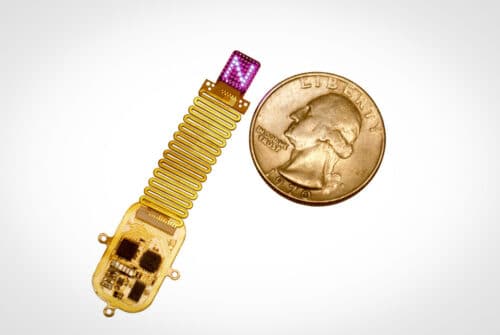
The scientists at Northwestern University have created a wireless device that uses strands of lights to send information directly to the brain bypassing the body’s natural sensory pathways.
This implant is a minimal invasive way to communicate directly with the brain to help restore lost senses, provide feedback for prosthetic limbs, pain modulation without drugs, rehabilitation after stroke or injury and for studying how the brain learns new signals opening new doors in the field of tech and neuroscience.
The soft, flexible device sits right under the scalp on top of the skull which uses an array of thin hair strands of micro LEDs. These patterns of light travel through the bone to activate genetically modified neurons across the brain’s outermost layer of nerve cell tissue called the cortex.
They tested a soft light-based implant that activates specific neurons in mice. Over time, the mice learned to understand and recognise these light patterns as meaningful signals. In trials, the device sent a unique pattern across four brain regions, like tapping a code onto their neural circuits. The mice recognized this pattern among many others and used it to pick the correct port for a reward.
Now that the brain can interpret patterned light signals, the team plans to test more and more complex patterns. The future versions may use more LEDs, tighter spacing and deeper reaching light, pushing this minimally invasive brain interface technology closer to real research, therapeutic and medical use.