New validation solutions target the reliability and scalability of next-gen in-vehicle networks.
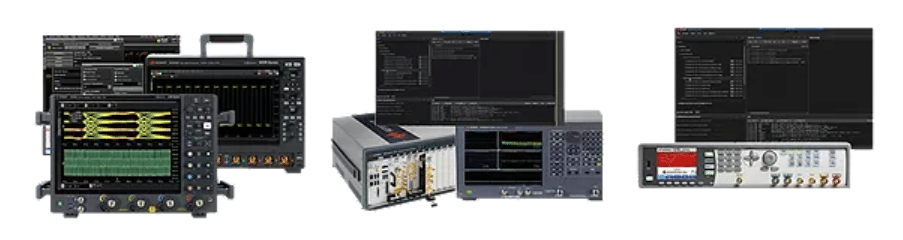
Keysight Technologies has introduced next-generation in-vehicle network test solutions to address the growing complexity of automotive Ethernet systems as vehicles transition toward software-defined and zonal architectures. The latest platforms focus on improving receiver (Rx) compliance testingnow considered critical for ensuring reliability and safety in high-speed automotive networks.
The solutions are designed to support validation across a wide range of automotive Ethernet standards, from 10BASE-T1S to 10GBASE-T1. This enables OEMs and Tier-1 suppliers to accelerate development of high-bandwidth in-vehicle communication systems required for advanced driver assistance systems (ADAS), autonomous driving, and data-intensive infotainment platforms.
As modern vehicles increasingly rely on centralised compute and distributed zonal architectures, network performance and robustness have become key design challenges. Automotive Ethernet is evolving rapidly to meet these demands, but ensuring interoperability and compliance, particularly at the receiver level, requires more advanced and automated testing approaches.
The key features are:
- Supports 10BASE-T1S to 10GBASE-T1 validation
- Advanced receiver compliance testing capabilities
- Optical and electrical Ethernet test support
- Enables zonal and software-defined vehicle architectures
- Automated testing aligned with industry standards
To address this, the new solutions introduce enhanced receiver-compliance validation capabilities tailored to both electrical and optical automotive Ethernet implementations. One of the highlighted systems supports multi-drop 10BASE-T1S architectures, enabling validation of zonal and edge-controller communication links. Another focuses on next-generation optical automotive Ethernet (nGBASE-AU), addressing requirements such as higher bandwidth, improved electromagnetic interference (EMI) resilience, and longer communication reach within vehicles.
The platforms also emphasise automation and standards compliance, aligning with industry specifications such as Open Alliance requirements. This helps reduce validation complexity and speeds up development cycles for automotive networking components.
With the shift toward software-defined vehicles, in-vehicle networks must handle significantly higher data rates while maintaining deterministic performance and safety. As a result, receiver testing is becoming a mission-critical stage in design and validation workflows, ensuring systems perform reliably under real-world conditions.
The solutions are being demonstrated at a major industry event focused on automotive Ethernet technologies, highlighting their role in supporting the next wave of connected and autonomous vehicle platforms.
Click here for the original announcement.