

A next-generation thick-film resistor designed for EV and hybrid platforms is pushing reliability standards and the ruggedness to survive heat, humidity, vibration, and electrical transients.
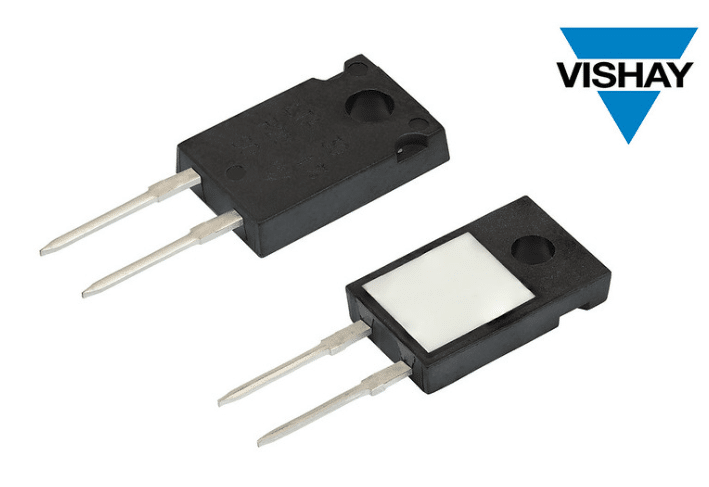
Vishay Intertechnology has expanded its automotive-grade lineup with a compact 30 W thick-film power resistor built to tackle the rising electrical demands in EV, HEV, and PHEV systems. The new Sfernice LTA 30, housed in a TO-220 package for direct heatsink mounting, targets designers looking for stable, high-voltage performance in safety-critical vehicle subsystems.
The key features are:
- Delivers 30 W power rating at a 50 °C case temperature when mounted on a heatsink
- Features a ceramic element designed for direct heatsink mounting
- Covers a wide resistance span from 0.010 Ω to 450 kΩ
At the top of its spec sheet is a 500 V operating voltage high for a device of its size paired with an overload capability of 1.5× rated power for up to five seconds. That combination positions the LTA 30 as a strong candidate for circuits that face routine transients, surges, or demanding startup sequences. The company is pitching this part squarely at precharge and discharge circuits inside on-board chargers, battery management systems, and motor control stages, where a single failure can cascade into system-level faults.
Reliability under stress appears to be the central theme.

The resistor carries full AEC-Q200 automotive qualification and is specified to operate at temperatures up to +125 °C. Vishay also highlights its resilience to high humidity, vibration, and electrical stress conditions common in tightly packed EV power electronics. A non-inductive design further supports the part’s suitability for high-frequency or fast-switching architectures. Dielectric strength is rated at 1500 Vrms.
The LTA 30 is offered across a broad resistance range from 0.010 Ω to 450 kΩ, with tolerances as low as ±1%. That flexibility gives automotive engineers room to fine-tune energy-dissipation paths, soft-start sequences, or braking-related functions without changing the broader system architecture. The device is also RoHS-compliant, aligning with global sustainability requirements. With EV platforms trending toward higher-power drivetrains and more compact electronics, components that can withstand environmental and electrical extremes are increasingly essential.
For more information, click here.