




Designed for inverter and battery management platforms, the shunt reference architecture supports consistent A to D conversion across varying thermal environments.
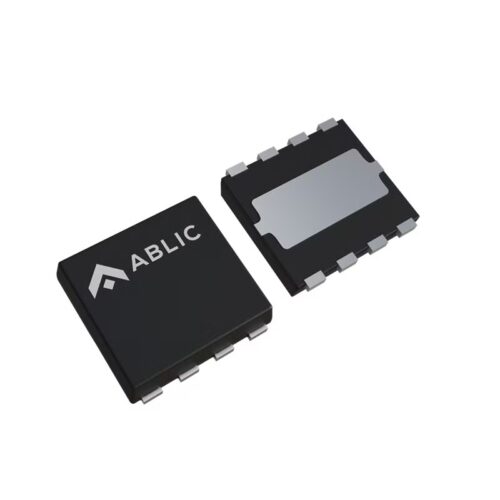
ABLIC has introduced the S-19760/1 Series automotive shunt reference ICs, designed to deliver highly stable and accurate reference voltages for vehicle electronics. The device can achieve ±0.1% output voltage accuracy and an output temperature coefficient as low as ±20 ppm per ℃, helping maintain precision even in harsh automotive environments.
The series is primarily used as a reference voltage source for A/D converters, which translate analog signals from sensors into digital data. In applications such as EV and HEV inverters, sensors continuously monitor current, voltage and motor position. Accurate digital conversion depends on a stable reference voltage, particularly across wide temperature ranges. By offering high initial accuracy and minimal drift from -40℃ to +125℃, the devices support improved sensor readout precision in demanding conditions.
The ICs can also feature low output noise of 28 µVrms at a 2.048 V output, reducing measurement errors during signal conversion. The S-19761 variant supports a maximum shunt current of 30 mA, allowing a single device to serve as a reference for multiple circuits. This can reduce component count, save board space and lower system costs.
The series operates with an input voltage range of 2 to 5.5 V and offers output voltage options including 2.048 V, 2.5 V, 3.0 V, 3.3 V, 4.096 V and 5.0 V. It includes built-in overcurrent protection and is available in both a standard SOT-23-3 package and a compact HSNT-8 package measuring 1.6 mm by 1.6 mm with a thickness of 0.41 mm.
Designed for automotive use, the devices can undergo three-temperature testing and are planned to meet AEC-Q100 reliability standards, supporting applications such as inverters, battery management systems, DC-DC converters and other vehicle control units.


