




Some “biodegradable” electronics don’t fully disappear. They can break into microplastics in soil. Material and manufacturing can affect device safety.
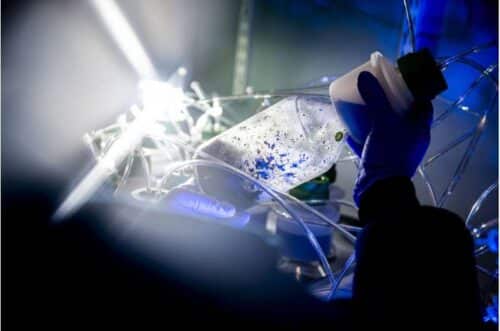
Electronics designed to biodegrade after use may not fully disappear. Some materials used in these devices can persist for years, break down into microplastics, and raise concerns about long-term environmental and soil damage.
To study this issue, researchers at Northeastern University examined materials used in transient electronics, which are intended to biodegrade after use. The research focused on whether these devices fully dissolve over time or leave behind harmful residues.
The study found that PEDOT:PSS, a polymer commonly used in medical electronics, can persist for more than eight years. During degradation, it can fragment into microplastics, raising concerns about its environmental safety when electronic waste enters soil.
The researchers evaluated two transient electronic devices: a partly degradable pressure sensor and a fully degradable photodetector. The results showed that material choice is critical. Polymers such as cellulose and silk fibroin degraded quickly and released byproducts that were not harmful, while others posed environmental risks during degradation.
In some cases, degradation of certain polymers may permanently damage soil, creating environmental and health concerns. This is especially relevant when electronic waste is disposed of in natural environments.
Further work is ongoing to better understand how polymer-based devices degrade in soil. This includes measuring carbon dioxide release to estimate degradation rates and identify byproducts over long test periods.
Interest in transient electronics has grown over the past decade, particularly for medical uses such as edible electronics and dissolvable implants. Market estimates indicate steady growth in biodegradable electronic polymers.
Beyond materials, electronics manufacturing remains resource-intensive and largely linear. Semiconductor fabrication consumes large volumes of water and chemicals and generates chemical wastewater, often in regions facing water stress.
The research points toward a shift to circular manufacturing systems. In these systems, materials are reused, electronics are designed to biodegrade safely, and devices either enrich soil or dissolve without leaving harmful waste.

