





How is this auto switch Solar Device harnessing the right energy at the right time? Find Out!
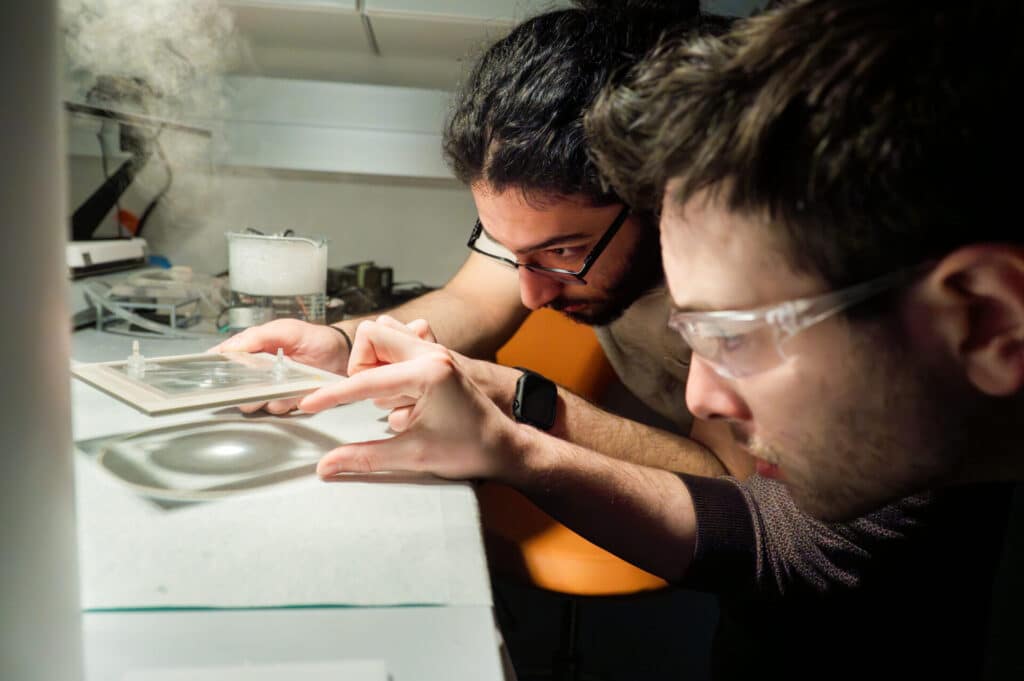
Researchers at Harvard have developed a “contrarian” solar harvester designed to deliver the right form of energy at the right time. The device uses a simple natural process, water evaporating and condensing, to function as an optical switch. Without using sensors, motors, or computer chips, it can automatically alternate between generating electricity in warmer conditions and providing heat during colder periods. In heating mode, it is remarkably efficient, converting about 90% of incoming sunlight into usable indoor warmth.
Traditional solar technologies tend to operate in a fixed way. Photovoltaic (PV) panels continuously generate electricity, regardless of whether that energy is needed for cooling or heating. On the other hand, solar-thermal systems keep producing heat even during hot weather, when it may not be desirable. This new dual-mode device is designed to respond directly to environmental conditions. Its switching behavior is guided by temperature, allowing it to better align with seasonal building needs.
The system itself is built as a simple layered structure consisting of a Fresnel lens, a sealed chamber of water, and a photovoltaic cell. Its operation depends entirely on the physical state of the water inside the chamber. In warm or hot conditions, the water turns into vapor, creating a mismatch in refractive index that enables the lens to focus sunlight directly onto the PV cell, generating electricity. When temperatures drop, the water condenses into liquid, reducing this mismatch and weakening the lens’s focusing ability. As a result, sunlight bypasses the PV cell and instead enters the building as heat.
Laboratory simulations based on a climate similar to Boston demonstrated that the device can automatically adjust its function around the dew point of 15°C. In summer, it primarily generates electricity, while in winters, it shifts to heating mode without any external control.
The efficiency gains are notable. In heating mode, the system achieves high performance levels. However, challenges remain, particularly regarding the angle of sunlight. Since the device is fixed, it performs optimally only during certain hours.


